Sachs, S., Young, M. T. & Hornung, J.J. (2020) Reassessment of Enaliosuchus schroederi, a metriorhynchid crocodylomorph from the Lower Cretaceous of northern Germany. 2nd Palaeontological Virtual Congress. Book of abstracts: 141.
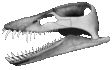
—During the Jurassic, metriorhynchid crocodylomorphs radiated in marine ecosystems. However, their Cretaceous fossil record is sparse. This hampers our understanding of their marine specialisations, particularly as the first evidence mesopelagic adaptations are seen in Valanginian specimens. One of the best preserved Cretaceous metriorhynchids is the holotype of Enaliosuchus schroederi, comprising a three-dimensionally preserved skull (lacking the anterior rostrum), atlas-axis, first postaxial cervical vertebra, and associated ribs. The specimen derives from the lower Valanginian Stadthagen Formation and was found in a now abandoned clay pit in Sachsenhagen, northern Germany. Initially referred to the genus Enaliosuchus in 1921 by Schroeder, Kuhn (1936) later named the specimen Enaliosuchus schroederi. Later studies disagreed on the taxonomic status of Enaliosuchus, its type species E. macrospondylus and whether E. schroederi is a valid species. Most recently both species have been referred to the Late Jurassic genus Cricosaurus. Our reassessment of the type material of E. macrospondylus and E. schroederi found clear differences in their atlas-axis morphologies, validating E. schroederi as a distinct taxon. These differences include: the atlas intercentrum extending to the dorsal part of the atlas centrum in E. schroederi whereas it only extends to the midsection of the atlas centrum in E. macrospondylus. The E. schroederi skull is also diagnostic, in lacrimal and sclerotic ring morphology, and orbit size. These craniofacial differences are significant when compared to the Late Jurassic Cricosaurus species. Our reassessment of the Enaliosuchus schroederi holotype begins to elucidate metriorhynchid morphological diversity at the zenith of their marine adaptations.