Kear, B.P., Sachs, S., Ekrt, P. & Hornung, J.J. (2013) Cenomanian-Turonian mosasauroids from the Bohemian Cretaceous Basin. In: Polcyn, M.J. & Jacobs, L.L. (eds) 4th Triennial International Mosasaur Meeting. Program and Abstracts. Dallas, Texas: 24.
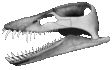
—The Bohemian Cretaceous Basin (BCB) is an intracontinental depositional depression that extends from Brno in eastern Moravia, through Bohemia to the north and west of Prague, and across the Czech-German border into southern Saxony around Dresden. During the early Late Cretaceous, the BCB formed part of the continuous peri-Tethyan shelf of central and southern Europe, which was inundated by a northwesterly trending marine transgression extending between the Tethys Ocean and the Boreal North Sea Basin. Fossils of marine amniotes that inhabited this shallow epicontinental seaway have been documented for over 155 years, but have attracted little recent research attention in comparison to other more famous localities elsewhere. Despite this, a comprehensive reassessment of existing museum collections, together with new excavations, has identified a succession of diverse assemblages spanning the late Cenomanian through to Turonian-Coniacian boundary. Conspicuous amongst the remains are the isolated bones and teeth of primitive mosasauroids. The stratigraphically oldest of these specimens derive from the late Cenomanian Dölzschen Formation around Dresden in eastern Germany, and include small teeth and a bone fragment possibly representing the posterior condyle of a procoelous centrum.