Sachs, S., Hornung, J., Wohlsein, P. & Kear, B. (2015) A new basal elasmosaurid skeleton with joint pathologies from the Lower Cretaceous of Germany. In: J. Jagt, G. Hebda, S. Mitrus, E. Jagt-Yazykova, A. Bodzioch et al. (eds.) EAVP. XIII Meeting Opole, Abstracts: 131.
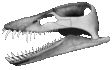
—The family Elasmosauridae constitutes one of the most iconic plesiosaurian clades. Their conservative body plan represents the popular model for Plesiosauria, and is characterised by a distinctive osteological morphology especially adapted for hyperelongation of the neck. Here we report on a new basal elasmosaurid from the Lower Cretaceous (upper Hauterivian) of Lower Saxony, northern Germany. The fossil comprises skeletal components from a n osteologically old individual: most of the cranium and partial mandible, the atlas axis complex, cervical and caudal vertebrae, ribs, an ilium and paddle elements. The specimen displays a number of primitive elasmosaurid traits including five premaxillar y teeth and amphicoelous craniad cervical centra that bear short lateral longitudinal ridges, but lack ventral notches on the articular faces. The dentaries are unusual in having extremely procumbent alveoli in the symphyseal region. The mandible also form s a prominent wedge shaped ventral platform. Interestingly, the articular surfaces of the basioccipital and atlas centrum show changes suggestive of a degenerative or chronic inflammatory joint disease. Irregular exostotic outgrowths adjacent to the articu lar surface are present similar to an osteophytic growth. These lesions may have caused impaired joint function and pain, perhaps contributing to the death of the individual.