Sachs, S., Kear, B.P. & Lindgren, J. (2016) Re-description of Thalassomedon haningtoni – an elasmosaurid from the Cenomanian of North America. In: Sachs, S., Kear, B.P. & Lindgren (eds) 5th Triennial Mosasaur Meeting – a global perspective on Mesozoic marine amniotes. Abstracts and Program: 38-40.
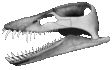
—Thalassomedon haningtoni is one of the most thoroughly documented elasmosaurids. The type specimen, a nearly complete skeleton representing an osteologically mature individual with a well preserved postcranium (but damaged skull) was found in Cenomanian strata of the Graneros Shale in Colorado, USA. The only comprehensive description of this specimen produced so far is that of Welles (1943); however, his interpretations are contentious and require substantial updating relative to subsequent elasmosaurid discoveries. A second specimen of T. haningtoni is also known from the Cenomanian Graneros Shale of Nebraska, USA. This skeleton comprises a well preserved skull and articulated series of cervical, pectoral and a few dorsal vertebrae. Welles (1970) briefly mentioned the Nebraska T. haningtoni material in a newspaper article, and both Carpenter (1999) and Sato (2002) provided an interpretation of its skull. The osteologically immature elasmosaurid remains of Alzadasaurus riggsi, found likewise in Cenomanian strata of the Belle Fourche Formation in Montana, USA, was referred to T. haningtoni by Carpenter (1999); however, most of these remains are fragmentary and heavily distorted and they are insufficient for a confident diagnosis. It therefore cannot be referred to Thalassomedon with certainty and is best considered a nomen dubium.