Madzia, D., Sachs, S., Evans, M., Lindgren, J., Kear, B.P. & Cau, A. (2017) Reappraisal of the ʽDorking Specimen’: An Upper Cretaceous brachauchenine pliosaurid from England. In: 15th Annual Meeting of the European Association of Vertebrate Palaeontologists Munich, Germany. Zitteliana 91: 55-56.
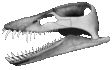
—Brachauchenine pliosaurids were marine macropredatory reptiles that might have been the only evolutionary lineage of pliosaurid plesiosaurians that crossed the Jurassic-Cretaceous boundary. Yet progress in understanding their origins and phylogenetic relationships has been hindered by limited knowledge of Early Cretaceous brachauchenine pliosaurid diversity and disparity relative to Late Cretaceous members of the clade. Late Cretaceous brachauchenines currently include only three valid taxa: Brachauchenius lucasi and Megacephalosaurus eulerti, initially described from the Turonian of Kansas, as well as ʽPolyptychodonʼ hudsoni from the Turonian of Texas. In Europe, the clade has long been represented by the widely distributed taxon Polyptychodon interruptus. However, recent reappraisal of the original type material of Polyptychodon from the mid-Cretaceous of England has shown that P. interruptus lacks diagnostic features, prompting a revision of all available specimens attributed to this classic taxon. Arguably the most complete is a partial cranium from the Cenomanian–middle Turonian of Dorking, England. This has been dubbed the ʽDorking specimen’, and was first described in 1860 by Sir Richard Owen, who referred it to Polyptychodon interruptus. Its historical association has also subsequently prompted suggestions that the specimen be designated the neotype of P. interruptus. Though incomplete, its morphology allows for comparisons with other brachauchenines, suggesting its potentially distinct nature. The phylogenetic placement of the specimen further supports the affinity with other Late Cretaceous brachauchenine pliosaurids, which clearly occupied apex-predator niches in marine ecosystems (including those of Europe) up until the end of the Turonian.