Cortés, D., Dios Parra-Ruge, J.D., Sachs, S. & Madzia, D. (2026) An exquisite, three-dimensionally preserved elasmosaurid from the Lower Cretaceous of Colombia. Abstracts of the 23rd conference of EAVP, Vilnius, Lithuania:34.
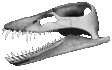
—We report a beautifully preserved elasmosaurid skeleton from the Paja Formation of Colombia, one of the best documented Lower Cretaceous marine reptile-bearing sequences worldwide. Discovered by the Fundación Colombiana de Geobiología about 25 years ago but remaining undescribed until now, it represents a significant and long overdue addition to the Lower Cretaceous marine reptile record. The specimen includes an almost intact skull and an articulated axial and appendicular skeleton, showing a high degree of anatomical completeness. Digital surface models reveal anatomical characters in the cranium, neck, and limbs that are rarely accessible in flattened specimens, permitting a refined assessment of body proportions and character distribution in early-diverging elasmosaurids. The skull differs from other Lower Cretaceous elasmosaurids from Colombia in its rostral proportions, palate and rostrum anatomy, and the circumorbital morphology. The undistorted axial skeleton shows cervical proportions and vertebral traits not yet described in any of the specimens from the Paja Formation. These observations suggest that the specimen shows a combination of cranial and postcranial characters that is unique within early elasmosaurids. Phylogenetic analyses place the specimen in close proximity to the contemporaneous Callawayasaurus, indicating a possible South American lineage of early-diverging elasmosaurids. The specimen also expands the anatomical record of Early Cretaceous plesiosaurs and provides novel data on the early evolution of the elasmosaurid body plan, including patterns of cervical elongation and regionalization, as well as broader morphofunctional disparity during a critical time of elasmosaurid diversification in tropical Mesozoic seas.