Sachs, S., Bertling, M. & Kear, B.P. (2017) Pliosauromorph plesiosaurian remains from the Late Cretaceous of northwestern Germany. In: 15th Annual Meeting of the European Association of Vertebrate Palaeontologists Munich, Germany. Zitteliana 91: 78-79.
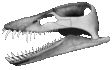
—Plesiosaurian skeletal remains are rare in Late Cretaceous strata of Europe. During several years in the 1950`s, various cranial and postcranial elements of a pliosauromorph plesiosaurian had been collected by amateurs at Anröchte, North Rhine-Westphalia, northwestern Germany. They were donated to the Geomuseum of the WWU, Münster, but remained unstudied over decades: their softness combined with the embedment in a hard siliceous rock precluded preparation until suitable techniques were developed. These remains represent the most complete plesiosaurian reptile find from Turonian strata in Europe, but they have only been studied provisionally as yet. The material comes from the Soest Greensand Member (Salder Formation) of Late Turonian age. Included are elements of the skull and lower jaw, isolated teeth, vertebrae, a scapula, an ilium and limb elements. The teeth are robust and conical, bearing prominent enamel ridges on the surface of the crown. The cervicals are amphicoelous. Characteristics at the propodials include a facet for a supernumerary epipodial at the humerus and femur as well as a massive, dome-shaped capitulum at the femur. The robust, conical teeth and the massive rostrum demonstrate that the Anröchte plesiosaurian was a pliosauromorph and an apex predator in its environment.