Genus Eoplesiosaurus Benson, Evans & Druckenmiller, 2012
Type species: Eoplesiosaurus antiquior Benson, Evans & Druckenmiller, 2012
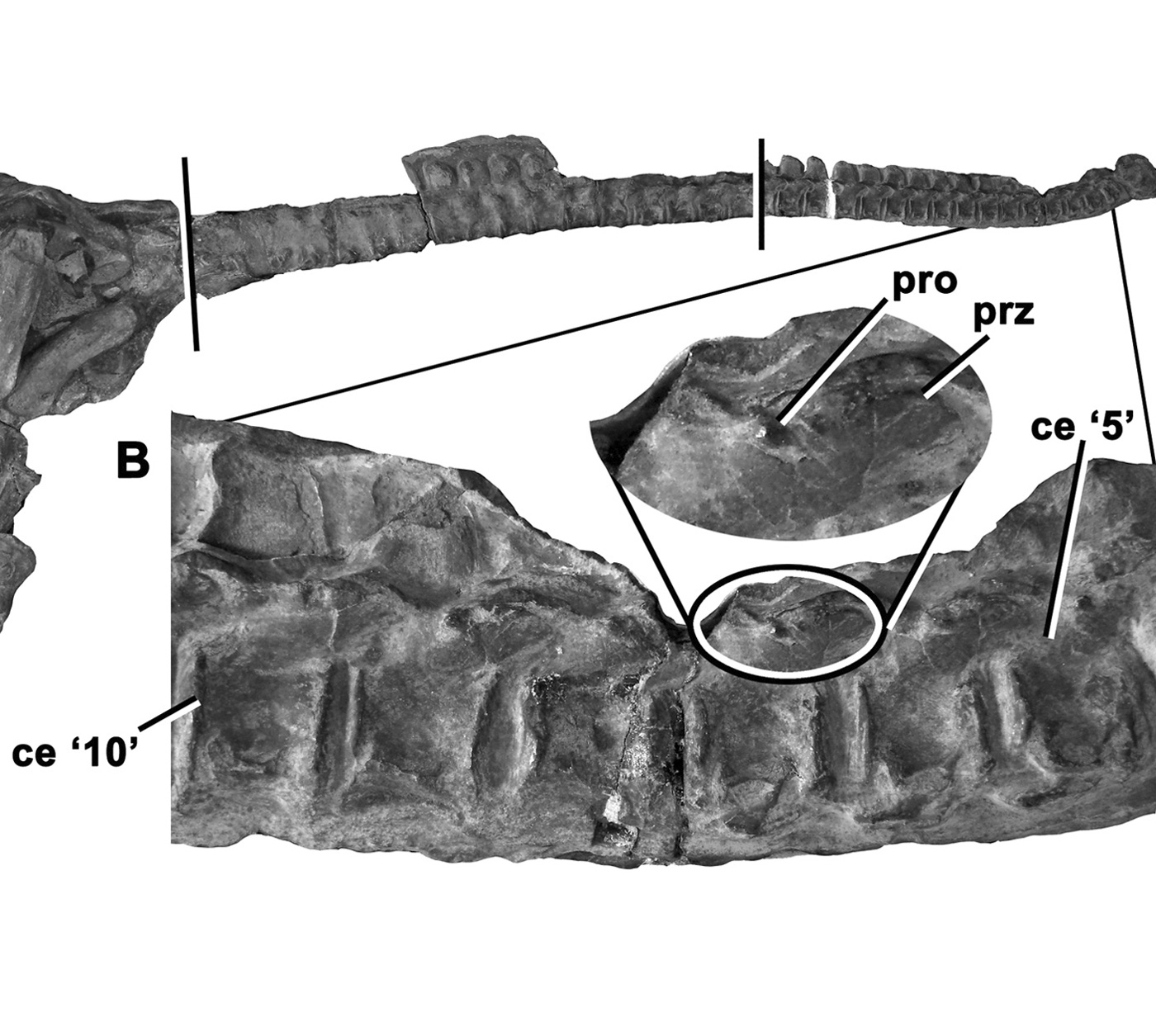
Diagnosis: Proportionally long-necked plesiosaurian (ratio of neck:trunk length>1.2) with at least 38 cervical vertebrae and one autapomorphy: small, conical lateral projections on the bases of the anterior cervical prezygapophyses (from Benson et al. 2012).
Distribution: Lower Jurassic, Hettangian, Europe (United Kingdom).
Eoplesiosaurus antiquior Benson, Evans & Druckenmiller, 2012
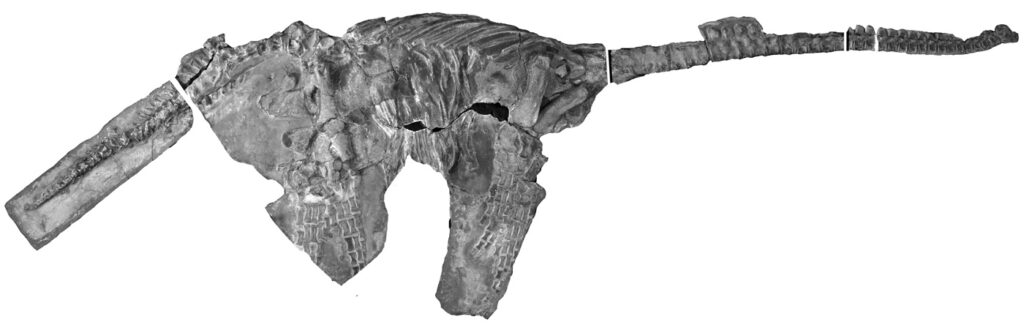
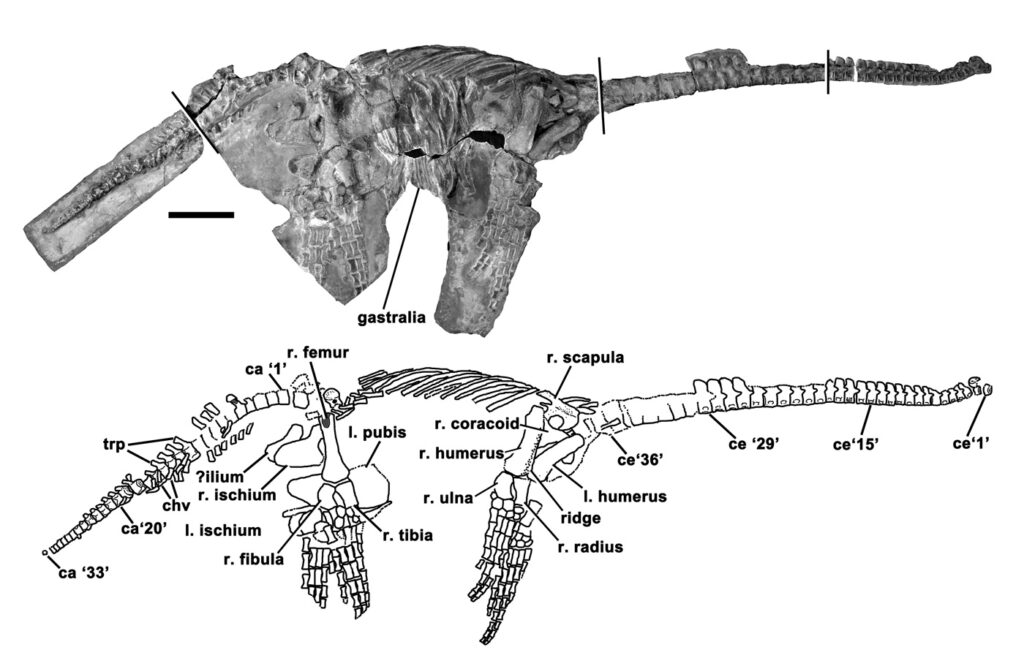
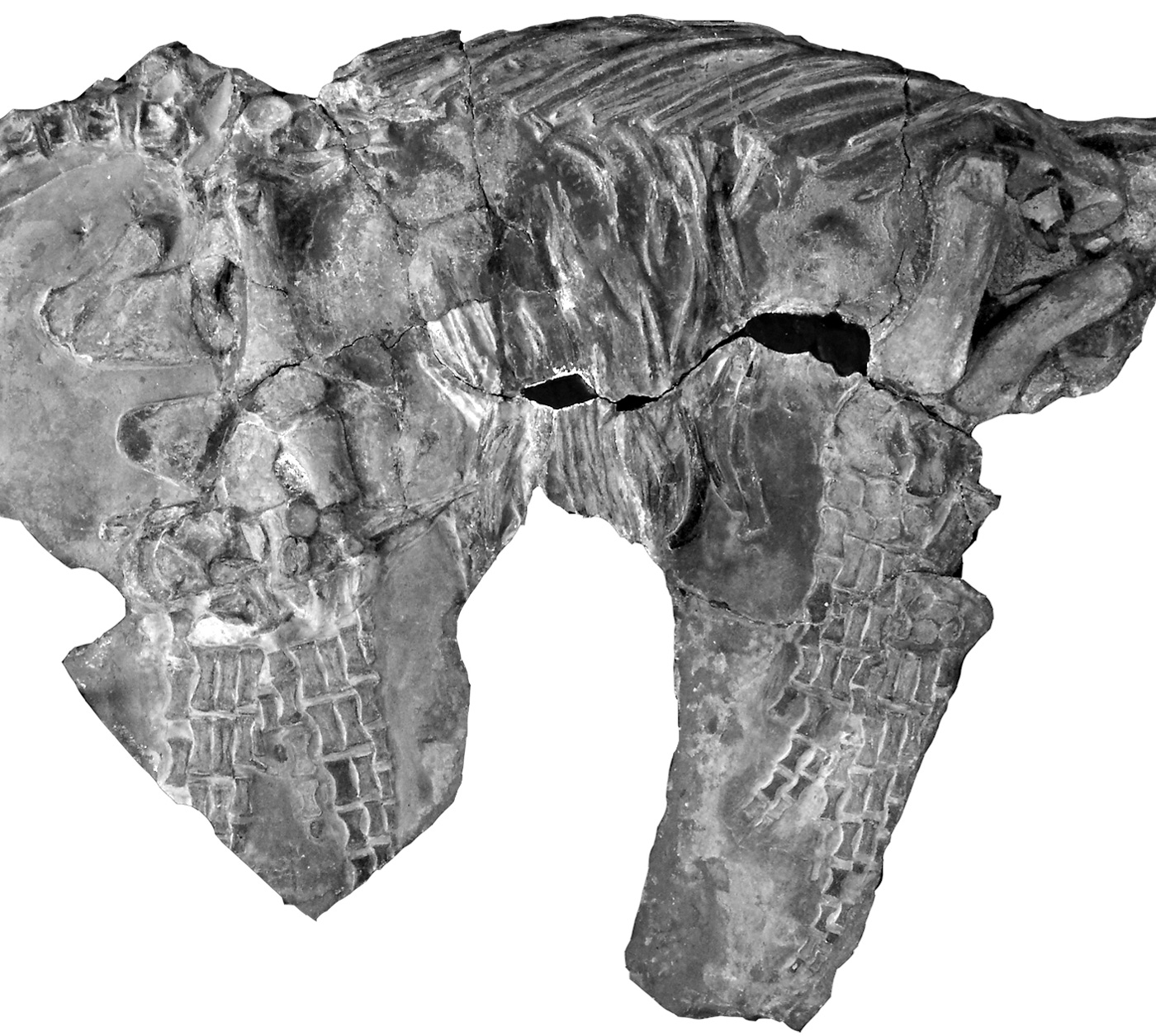
Holotype: TTNCM 8348, almost complete and articulated postcranial skeleton.
Stratum typicum: Blue Lias Formation, Pre-planorbis beds, earliest Hettangian, Lower Jurassic.
Locus typicus: Watchet, Somerset, England.
Diagnosis: As for the genus.
Comments: Eoplesiosaurus antiquior is the earliest currently known representative of the Plesiosauroidea and one of the earliest Jurassic plesiosaurs. Notably, Eoplesiosaurus already exhibits a remarkably high cervical count, with at least 38 cervical vertebrae, of which 36 are preserved in an articulated series with the atlas-axis complex being missing. This exceeds the cervical vertebral count in most other early-diverging plesiosauroids.
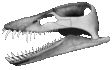
Systematic palaeontology (sensu Benson & Druckenmiller 2014)
Plesiosauria de Blainville, 1835
Plesiosauroidea Gray, 1825
Institutional abbreviations
TTNCM – Somerset County Museum, Taunton, United Kingdom
Image courtesy
The images are taken from the publication by Benson et al. (2012) and are distributed under a Creative Commons Attribution 2.5 Generic license.
Cited literature
de Blainville, H. M. D. (1835) Description de quelques espèces de reptiles de la Californie, précédée de l’analyse d’une système générale d’Erpetologie et d’Amphibiologie. Nouvelles Archives du Muséum d’Histoire Naturelle. 4, 233–296.