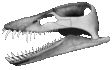
Plesiosauria – A systematic and taxonomic overview
Plesiosaurs are a diverse group of marine reptiles known from the Late Triassic to the end of the Cretaceous. They inhabited a wide range of ecosystems, from the open ocean to lakes and rivers, and even cold Arctic waters. Over the course of their evolution, plesiosaurs diversified into numerous taxa.
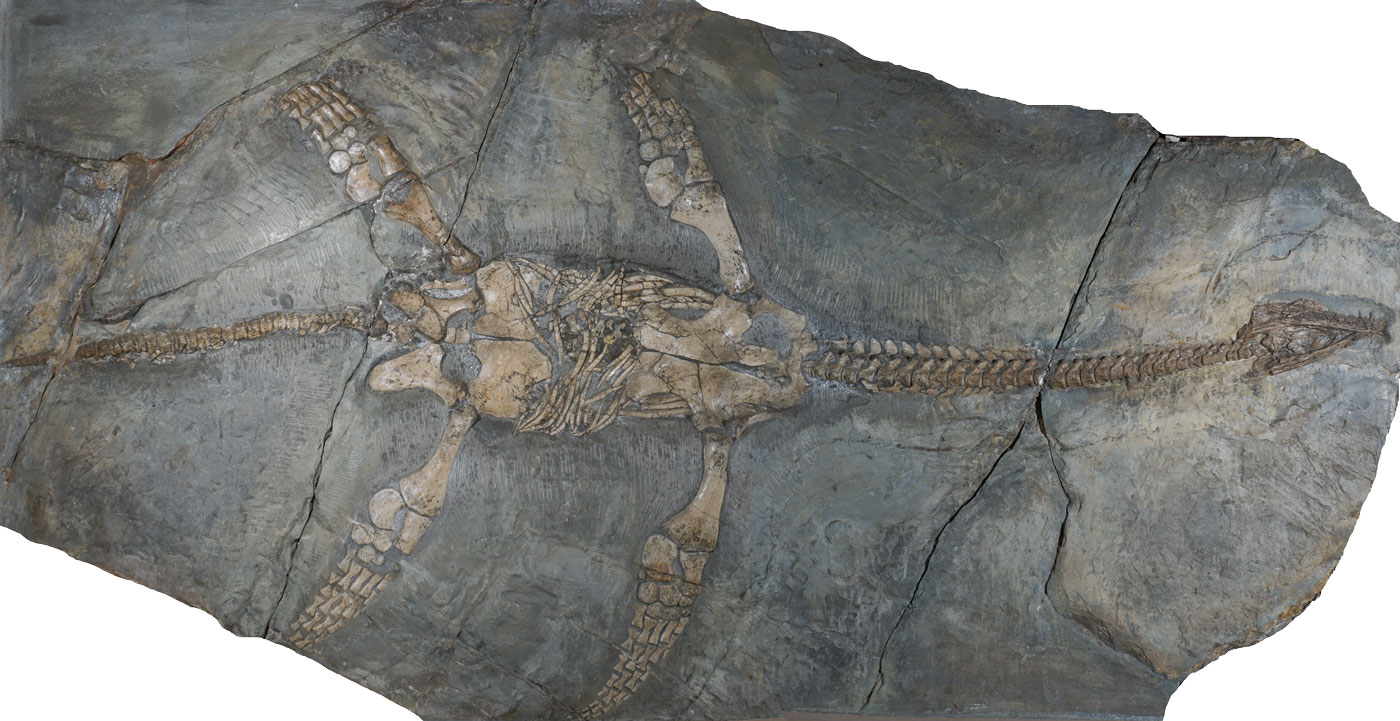
The oldest representative known from material diagnostic at the genus level, Rhaeticosaurus mertensi from the Rhaetian (Late Triassic) of Germany, was likely a pliosaurid. Additional pliosaurid taxa such as Thalassiodracon hawkinsii are known from the earliest Jurassic (Hettangian), suggesting that pliosaurids represent the oldest, or among the oldest, plesiosaur clades. Likewise, early in plesiosaur evolution, rhomaleosaurids emerged.
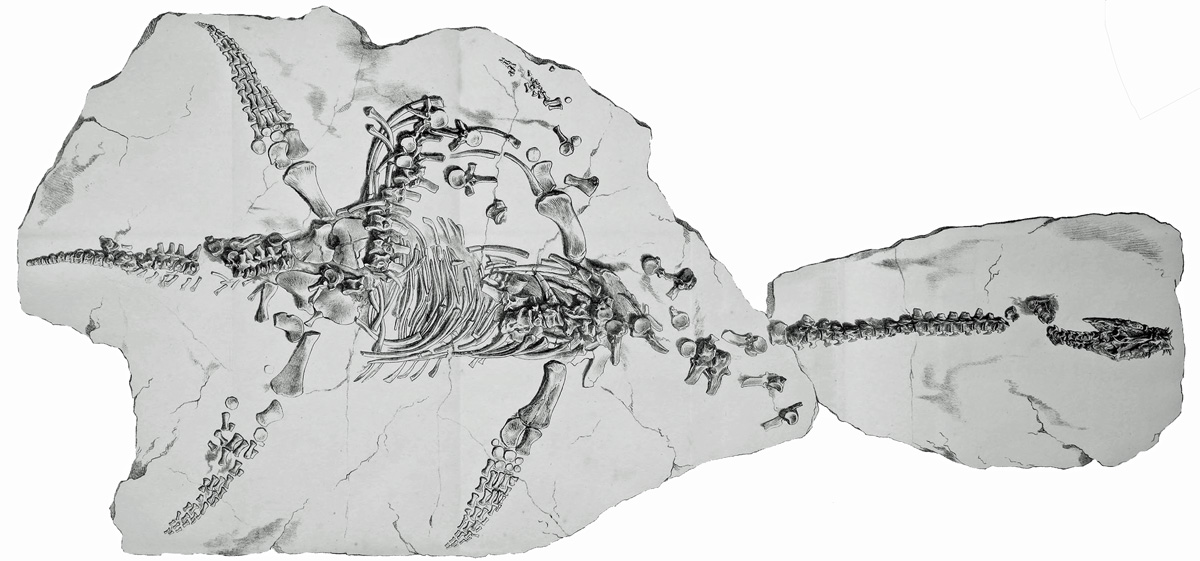
On the other major branch of plesiosaur evolution lies the Plesiosauroidea, a diverse clade whose earliest representatives also appear in the earliest Jurassic. The oldest currently known member of this group is Eoplesiosaurus antiquior, which dates to the Hettangian stage of the Early Jurassic.
Here, a taxonomic overview of plesiosaurs is presented, encompassing both currently recognized valid taxa and those whose status remains uncertain or dubious. The phylogenetic framework follows the results of recent publications. The aim of this project is to compile a comprehensive overview of this group of marine reptiles, which should serve as an archive. Detailed profiles for each taxon are being added progressively. For taxa already updated, a link is provided to a dedicated page containing in-depth data. please utilize the Search function to filter the tables, This work also serves as the foundation for a planned textbook on plesiosaurs. Please note that this is an ongoing project, and new taxa will be added over time — so be sure to check back periodically for updates.
Last updated: 12.03.2026
Simplified phylogenetic framework
Plesiosauria de Blainville, 1835
Pliosauridae Seeley, 1874
The family Pliosauridae first appeared in the Late Triassic and persisted until the early Late Cretaceous. This diverse group includes long-necked early forms, such as Thalassiodracon haningtoni, as well as massive later-derived taxa with massive skulls, such as Pliosaurus keavni.
Currently, pliosaurids are divided into early-derived forms and members of the Thalassophonea. The latter group emerged in the mid-Middle Jurassic and continued until the end of the pliosaurid radiation.
The latest members of the Thalassophonea are united in a clade called Brachaucheninae, which encompasses only taxa that occurred during the Cretaceous. Their oldest known representatives, Luskhan itilensis and Makhaira rossica, date to the Hauterivian stage of the Early Cretaceous, while their latest records stem from the Turonian stage of the Late Cretaceous.
| Genus | Species | Age | Stage | Distribution | Link |
|---|---|---|---|---|---|
| Rhaeticosaurus | Rhaeticosaurus mertensi | Triassic | Rhaetian | Europe | Rhaeticosaurus mertensi |
| Thalassiodracon | Thalassiodracon hawkinsii | Jurassic | Hettangian | Europe | |
| Attenborosaurus | Attenborosaurus conybeari | Jurassic | Sinemurian | Europe | Attenborosaurus conybeari |
| Arminisaurus | Arminisaurus schuberti | Jurassic | Pliensbachian | Europe | |
| Cryonectes | Cryonectes neustriacus | Jurassic | Pliensbachian | Europe | |
| Hauffiosaurus | Hauffiosaurus longirostris | Jurassic | Toarcian | Europe | |
| Hauffiosaurus | Hauffiosaurus tomistomimus | Jurassic | Toarcian | Europe | |
| Hauffiosaurus | Hauffiosaurus zanoni | Jurassic | Toarcian | Europe | |
| Lorrainosaurus | Lorrainosaurus keilieni | Jurassic | Bajocian | Europe | Lorrainosaurus keileni |
| Eardasaurus | Eardasaurus powelli | Jurassic | Callovian | Europe | |
| Liopleurodon | Liopleurodon ferox | Jurassic | Callovian | Europe | |
| Marmornectes | Marmornectes candrewi | Jurassic | Callovian | Europe | |
| Pachycostasaurus | Pachycostasaurus dawni | Jurassic | Callovian | Europe | |
| Peloneustes | Peloneustes philarchus | Jurassic | Callovian | Europe | |
| 'Pliosaurus' | 'Pliosaurus' andrewsi | Jurassic | Callovian | Europe | |
| Simolestes | Simolestes vorax | Jurassic | Callovian | Europe | |
| Anguanax | Anguanax zignoi | Jurassic | Oxfordian | Europe | |
| Gallardosaurus | Gallardosaurus iturraldei | Jurassic | Oxfordian | America | |
| Pliosaurus | Pliosaurus carpenteri | Jurassic | Kimmeridgian | Europe | |
| 'Pliosaurus' | 'Pliosaurus' portentificus | Jurassic | Kimmeridgian | Europe | Pliosaurus portentificus |
| Pliosaurus | Pliosaurus westburyensis | Jurassic | Kimmeridgian | Europe | |
| Pliosaurus | Pliosaurus brachydeirus | Jurassic | Kimmeridgian-Tithonian | Europe | |
| Pliosaurus | Pliosaurus brachyspondylus | Jurassic | Kimmeridgian-Tithonian | Europe | |
| Pliosaurus | Pliosaurus kevani | Jurassic | Kimmeridgian-Tithonian | Europe | |
| Pliosaurus | Pliosaurus macromerus | Jurassic | Kimmeridgian-Tithonian | Europe | |
| Pliosaurus | Pliosaurus almanzaensis | Jurassic | Tithonian | America | |
| Pliosaurus | Pliosaurus funkei | Jurassic | Tithonian | Europe | |
| 'Pliosaurus' | 'Pliosaurus' irgisensis | Jurassic | Tithonian | Europe | Pliosaurus irgisensis |
| Pliosaurus | Pliosaurus patagonicus | Jurassic | Tithonian | America | |
| Pliosaurus | Pliosaurus rossicus | Jurassic | Tithonian | Europe | |
| Luskhan | Luskhan itilensis | Cretaceous | Hauterivian | Europe | |
| Makhaira | Makhaira rossica | Cretaceous | Hauterivian | Europe | |
| Sachicasaurus | Sachicasaurus vitae | Cretaceous | Barremian | America | |
| Stenorhynchosaurus | Stenorhynchosaurus munozi | Cretaceous | Barremian | America | |
| Acostasaurus | Acostasaurus pavachoquensis | Cretaceous | Aptian | America | |
| Boyacasaurus | Boyacasaurus sumercei | Cretaceous | Aptian | America | |
| Monquirasaurus | Monquirasaurus boyacensis | Cretaceous | Aptian | America | |
| Eiectus | Eiectus longmani | Cretaceous | Aptian | Australia | |
| Kronosaurus | Kronosaurus queenslandicus | Cretaceous | Aptian-Albian | Australia | |
| Brachauchenius | Brachauchenius lucasi | Cretaceous | Turonian | America | |
| Megacephalosaurus | Megacephalosaurus eulerti | Cretaceous | Turonian | America |
Rhomaleosauridae Kuhn, 1961
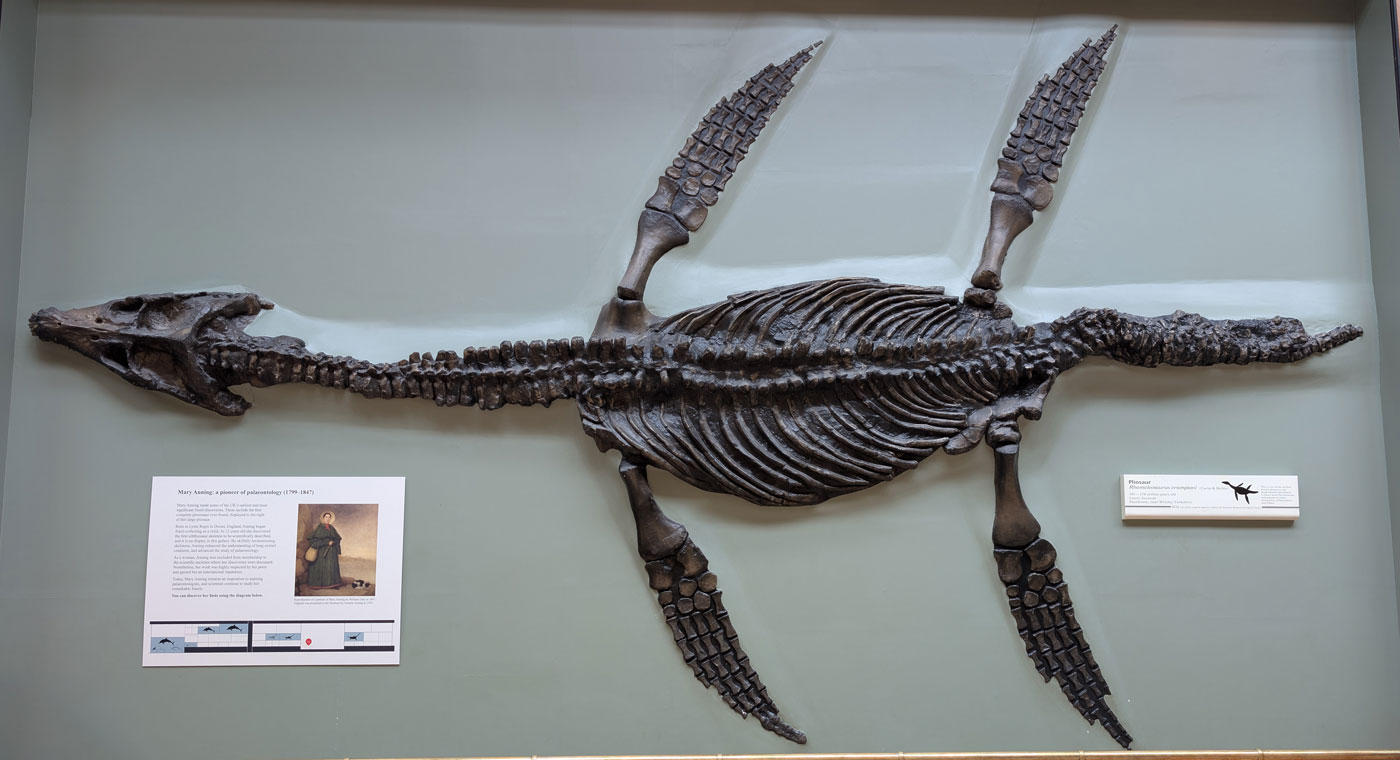
The Rhomaleosauridae were a clade of predominantly large-bodied plesiosaurs restricted to the Jurassic. Although their fossil record is richest in the Early Jurassic, they persisted into the Middle Jurassic, albeit with fewer taxa and specimens.
The earliest rhomaleosaurids appear in the Hettangian, already represented by a diverse assemblage of distinct species. By the Toarcian, the group included massive apex predators such as Rhomaleosaurus cramptoni, which occupied the highest trophic levels among contemporary plesiosaurs.
In the Middle Jurassic, rhomaleosaurid diversity declined but did not disappear. Maresaurus coccai from the Bajocian retained specialized features, including a massive skull, while vertebrae described as Trematospondylus macrospondylus indicate that large forms persisted into the Bathonian. As thalassophonean pliosaurs diversified during the mid-Middle Jurassic, rhomaleosaurids waned. Borealonectes russelli from the Callovian stage is one of the stratigraphically youngest representatives of the clade.
| Genus | Species | Age | Stage | Distribution | Link |
|---|---|---|---|---|---|
| Atychodracon | Atychodracon megacephalus | Jurassic | Hettangian | Europe | |
| Avalonnectes | Avalonnectes arturi | Jurassic | Hettangian | Europe | Avalonnectes arturi |
| Eurycleidus | Eurycleidus arcuatus | Jurassic | Hettangian | Europe | |
| Lindwurmia | Lindwurmia thiuda | Jurassic | Hettangian | Europe | Lindwurmia thiuda |
| Macroplata | Macroplata tenuiceps | Jurassic | Hettangian | Europe | |
| Stratesaurus | Stratesaurus taylori | Jurassic | Hettangian | Europe | |
| Anningasaura | Anningasaura lymense | Jurassic | Hettangian-Pliensbachian | Europe | |
| Archaeonectrus | Archaeonectrus rostratus | Jurassic | Sinemurian | Europe | |
| Thaumatodracon | Thaumatodracon wiedenrothi | Jurassic | Sinemurian | Europe | |
| Meyerasaurus | Meyerasaurus victor | Jurassic | Toarcian | Europe | |
| Rhomaleosaurus | Rhomaleosaurus cramptoni | Jurassic | Toarcian | Europe | |
| Rhomaleosaurus | Rhomaleosaurus thorntoni | Jurassic | Toarcian | Europe | |
| Rhomaleosaurus | Rhomaleosaurus zetlandicus | Jurassic | Toarcian | Europe | |
| Sthenarosaurus | Sthenarosaurus dawkinsi | Jurassic | Toarcian | Europe | |
| Maresaurus | Maresaurus coccai | Jurassic | Bajocian | South America | |
| Yuzhoupliosaurus | Yuzhoupliosaurus chengjiangensis | Jurassic | Bajocian-Bathonian | Asia | |
| Trematospondylus | Trematospondylus macrospondylus | Jurassic | Bathonian | Europe | |
| Borealonectes | Borealonectes russelli | Jurassic | Callovian | North America |
Plesiosauroidea Gray, 1825
Early-diverging plesiosauroids
Some early plesiosauroid taxa could not be assigned to a specific clade in recent analyses. Also, some families, such as Plesiosauridae, have not been supported. These taxa are listed here as early-diverging plesiosauroids.
| Genus | Species | Age | Stage | Distribution | Link |
|---|---|---|---|---|---|
| Eoplesiosaurus | Eoplesiosaurus antiquior | Jurassic | Hettangian | Europe | Eoplesiosaurus antiquior |
| Eretmosaurus | Eretmosaurus rugosus | Jurassic | Sinemurian | Europe | |
| Plesiopharos | Plesiopharos moelensis | Jurassic | Sinemurian | Europe | |
| Plesiosaurus | Plesiosaurus dolichodeirus | Jurassic | Sinemurian | Europe | |
| Westphaliasaurus | Westphaliasaurus simonsensii | Jurassic | Pliensbachian | Europe | |
| Franconiasaurus | Franconiasaurus brevispinus | Jurassic | Toarcian | Europe | Franconiasaurus brevispinus |
| Lusonectes | Lusonectes sauvagei | Jurassic | Toarcian | Europe | Lusonectes sauvagei |
| Plesionectes | Plesionectes longicollum | Jurassic | Toarcian | Europe | Plesionectes longicullum |
| Plesiopterys | Plesiopterys wildi | Jurassic | Toarcian | Europe | |
| Gondwananectes | Gondwananectes osvaldoi | Jurassic | Bajocian | South America |
Microcleididae Benson, Evans & Druckenmiller, 2012
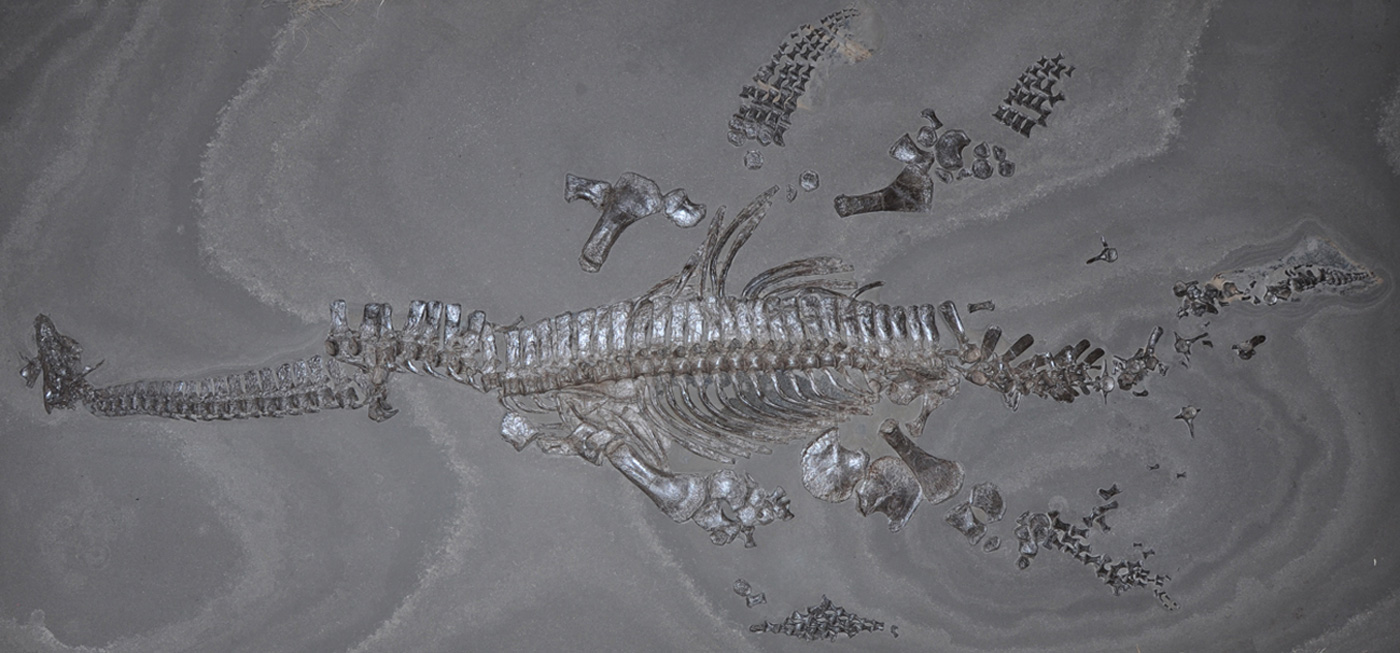
Microcleididae are a clade of plesiosauroids from the Lower Jurassic. They are characterized by markedly elongated neural spines in the cervical, pectoral, and dorsal vertebrae, which can exceed three times the height of the associated centra.
Microcleidus tournemirensis (originally described as Occitanosaurus tournemirensis) from the late Toarcian of France is notable for possessing more than 40 cervical vertebrae, as well as lateral longitudinal ridges on the cervical centra. Other microcleidids had more than 30 cervical vertebrae.
The clade is currently known mainly from the Toarcian stage, with possible isolated material reported from Pliensbachian strata. Most specimens derive from the Posidonia Shale of Germany and the Whitby area of Yorkshire, Great Britain, and are represented by nearly complete, articulated skeletons. Other material is known from Siberia and Luxembourg.
| Genus | Species | Age | Stage | Distribution | Link |
|---|---|---|---|---|---|
| Microcleidus | Microcleidus homalospondylus | Jurassic | Toarcian | Europe | |
| Microcleidus | Microcleidus tournemirensis | Jurassic | Toarcian | Europe | |
| Microcleidus | Microcleidus brachypterygius | Jurassic | Toarcian | Europe | |
| Microcleidus | Microcleidus macropterus | Jurassic | Toarcian | Europe | Microcleidus macropterus |
| Microcleidus | Microcleidus melusinae | Jurassic | Toarcian | Europe | |
| Seeleyosaurus | Seeleyosaurus guilelmiimperatoris | Jurassic | Toarcian | Europe |
Cryptoclidia Ketchum & Benson, 2010
Cryptoclididae Williston, 1925
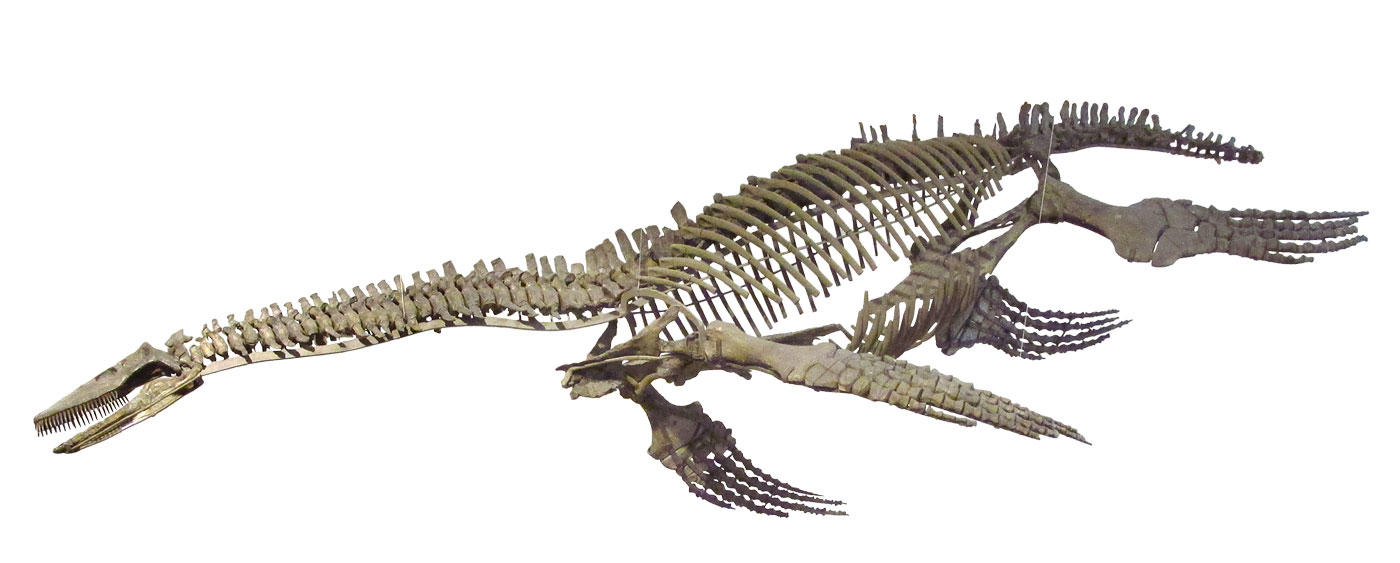
Cryptoclididae are a diverse clade of plesiosaurs that first appear in the Middle Jurassic. They are especially well documented in the Oxford Clay Formation of the United Kingdom, which has yielded abundant, well-preserved material and a high taxonomic diversity.
Geographically, cryptoclidids were widespread, with confirmed occurrences across Europe, Russia, and North America, and possible records from Australia. Their stratigraphic range extends into the Early Cretaceous. The youngest secure record is Abyssosaurus nataliae from the Hauterivian of Russia. Opallionectes andamookaensis from the Aptian of Australia has also been discussed as a potential cryptoclidid, although its phylogenetic position remains debated.
| Genus | Species | Age | Stage | Distribution | Link |
|---|---|---|---|---|---|
| Cryptoclidus | Cryptoclidus eurymerus | Jurassic | Callovian | Europe | |
| Muraenosaurus | Muraenosaurus leedsii | Jurassic | Callovian | Europe | |
| Tricleidus | Tricleidus seeleyi | Jurassic | Callovian | Europe | |
| Picrocleidus | Picrocleidus beloclis | Jurassic | Callovian | Europe | |
| Pantosaurus | Pantosaurus striatus | Jurassic | Oxfordian | North America | |
| Tatenectes | Tatenectes laramiensis | Jurassic | Oxfordian | North America | |
| Vinialesaurus | Vinialesaurus caroli | Jurassic | Oxfordian | North America | |
| Kimmerosaurus | Kimmerosaurus langhami | Jurassic | Kimmeridgian | Europe | |
| Colymbosaurus | Colymbosaurus trochanterius | Jurassic | Kimmeridgian-Tithonian | Europe | |
| Colymbosaurus | Colymbosaurus svalbardensis | Jurassic | Tithonian-Berriasian | Europe | |
| Djupedalia | Djupedalia engeri | Jurassic | Tithonian | Europe | |
| Spitrasaurus | Spitrasaurus larseni | Jurassic | Tithonian | Europe | |
| Spitrasaurus | Spitrasaurus wensaasi | Jurassic | Tithonian | Europe | |
| Abyssosaurus | Abyssosaurus nataliae | Cretaceous | Hauterivian | Europe | |
| Opallionectes | Opallionectes andamookaensis | Cretaceous | Aptian | Oceania |
Xenopsaria Benson & Druckenmiller, 2014
Elasmosauridae Cope, 1869
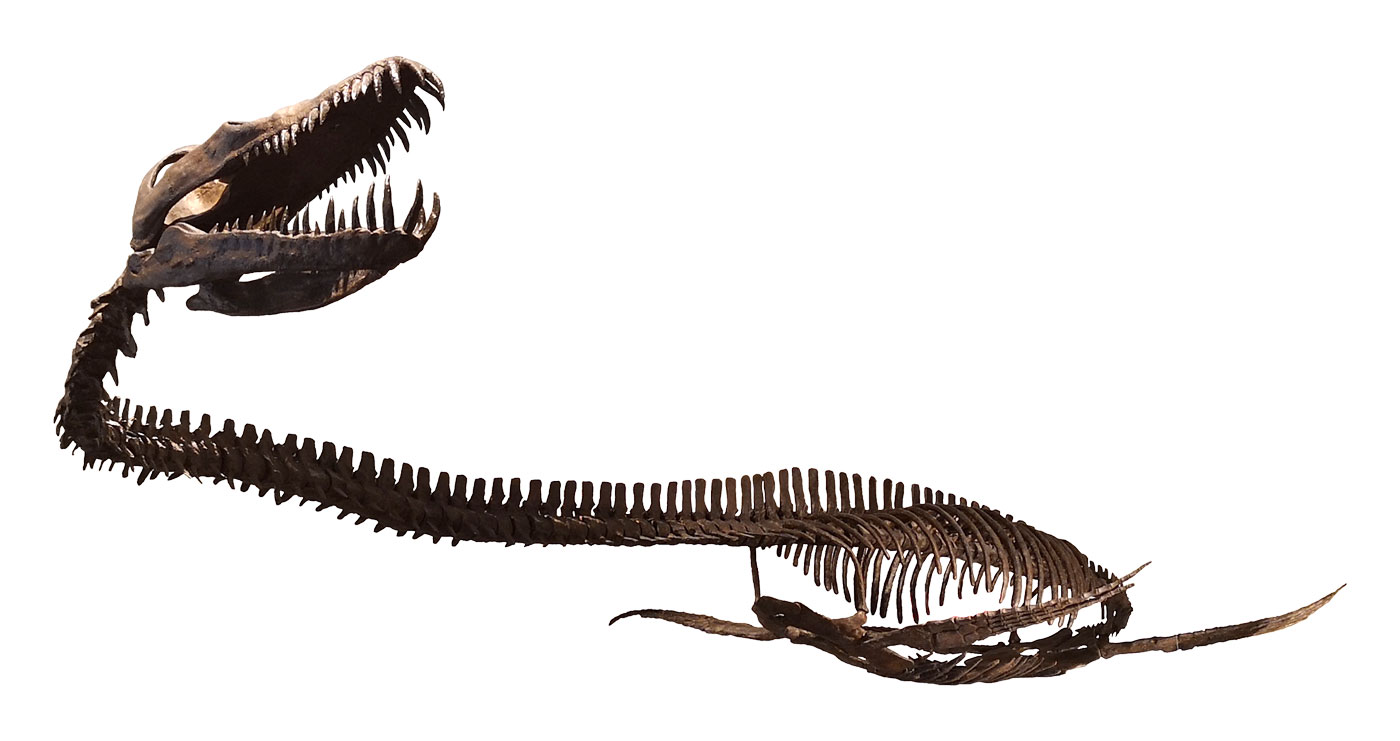
Elasmosauridae is a derived clade of plesiosaurs known exclusively from Cretaceous strata. It represents the most taxonomically diverse radiation among plesiosauroids and achieved a near-global palaeogeographic distribution.
The earliest elasmosaurids diagnostic on genus level occur in the Hauterivian (Lower Cretaceous), including Jucha squalea and Lagenanectes richterae. A defining feature of most members of the clade is the hyper-elongate neck. In taxa preserving complete or nearly complete cervical series, more than 50 cervical vertebrae are typical. In extreme cases, such as Elasmosaurus platyurus and Albertonectes vanderveldei, the count exceeds 70 cervical vertebrae.
Among many Late Cretaceous elasmosaurids, a ventral notch on the articular faces of the cervical vertebrae is a recurring feature. This condition is absent in early forms such as Lagenanectes richterae and Callawayasaurus colombiensis, but is present in Cenomanian–Turonian taxa including Thalassomedon haningtoni and Libonectes morgani. Another common trait is a longitudinal lateral ridge on the cervical centra, although this also occurs in other long-necked plesiosaurs.
Recent phylogenetic studies subdivide Elasmosauridae into several subclades, including Styxosaurinae and Elasmosaurinae. Aristonectinae forms a well-supported lineage within the family and represents one of its latest radiations. Known primarily from Maastrichtian deposits of the Southern Hemisphere, aristonectines differ from non-aristonectine elasmosaurids in possessing a relatively large skull with numerous slender teeth and a comparatively short neck composed of anteroposteriorly abbreviated vertebrae. The stratigraphically youngest elasmosaurids are recorded from the upper Maastrichtian, including Zarafasaura oceanis and Chubutinectes carmeloi.
| Genus | Species | Age | Stage | Distribution | Link |
|---|---|---|---|---|---|
| Jucha | Jucha squalea | Cretaceous | Hauterivian | Europe | |
| Lagenanectes | Lagenanectes richterae | Cretaceous | Hauterivian-Barremian | Europe | Lagenanectes richterae |
| Callawayasaurus | Callawayasaurus colombiensis | Cretaceous | Aptian | South America | |
| Leivanectes | Leivanectes bernardoi | Cretaceous | Aptian | South America | |
| Eromangasaurus | Eromangasaurus australis | Cretaceous | Albian | Oceania | |
| Wapuskanectes | Wapuskanectes betsynichollsae | Cretaceous | Albian | North America | |
| Alzadasaurus | Alzadasaurus tropicus | Cretaceous | Cenomanian | South America | |
| Plesioelasmosaurus | Plesioelasmosaurus walkeri | Cretaceous | Cenomanian | North America | |
| Thalassomedon | Thalassomedon haningtoni | Cretaceous | Cenomanian | North America | |
| Libonectes | Libonectes morgani | Cretaceous | Turonian | Africa & North America | Libonectes morgani |
| Futabasaurus | Futabasaurus suzukii | Cretaceous | Santonian | Asia | Futabasaurus suzukii |
| Traskasaura | Traskasaura sandrae | Cretaceous | Santonian | North America | |
| Albertonectes | Albertonectes vanderveldei | Cretaceous | Campanian | North America | |
| Elasmosaurus | Elasmosaurus platyurus | Cretaceous | Campanian | North America | |
| Fluvionectes | Fluvionectes sloanae | Cretaceous | Campanian | North America | |
| Hydralmosaurus | Hydralmosaurus serpentinus | Cretaceous | Campanian | North America | |
| Nakonanectes | Nakonanectes bradti | Cretaceous | Campanian | North America | |
| Styxosaurus | Styxosaurus browni | Cretaceous | Campanian | North America | |
| Styxosaurus | Styxosaurus snowii | Cretaceous | Campanian | North America | Styxosaurus snowii |
| Terminonatator | Terminonatator ponteixensis | Cretaceous | Campanian | North America | |
| Tuarangisaurus | Tuarangisaurus keyesi | Cretaceous | Campanian-Maastrichtian | Oceania | |
| Alexandronectes | Alexandronectes zealandiensis | Cretaceous | Maastrichtian | Oceania | |
| Aphrosaurus | Aphrosaurus furlongi | Cretaceous | Maastrichtian | North America | |
| Aristonectes | Aristonectes parvidens | Cretaceous | Maastrichtian | South America | |
| Aristonectes | Aristonectes quiriquinensis | Cretaceous | Maastrichtian | South America | |
| Cardiocorax | Cardiocorax mukulu | Cretaceous | Maastrichtian | Africa | |
| Chubutinectes | Chubutinectes carmeloi | Cretaceous | Maastrichtian | South America | |
| Hydrotherosaurus | Hydrotherosaurus alexandrae | Cretaceous | Maastrichtian | North America | |
| Kaiwhekea | Kaiwhekea katiki | Cretaceous | Maastrichtian | Oceania | |
| Kawanectes | Kawanectes lafquenianum | Cretaceous | Maastrichtian | South America | |
| Leurospondylus | Leurospondylus ultimus | Cretaceous | Maastrichtian | North America | |
| Marambionectes | Marambionectes molinai | Cretaceous | Maastrichtian | Antarctica | |
| Mauisaurus | Mauisaurus haasti | Cretaceous | Maastrichtian | Oceania | |
| Morenosaurus | Morenosaurus stocki | Cretaceous | Maastrichtian | North America | |
| Morturneria | Morturneria seymourensis | Cretaceous | Maastrichtian | Antarctica | |
| Vegasaurus | Vegasaurus molyi | Cretaceous | Maastrichtian | Antarctica | |
| Wunyelfia | Wunyelfia maulensis | Cretaceous | Maastrichtian | South America | |
| Zarafasaura | Zarafasaura oceanis | Cretaceous | Maastrichtian | Africa |
Leptocleidia Ketchum & Benson, 2010
Leptocleididae White, 1940
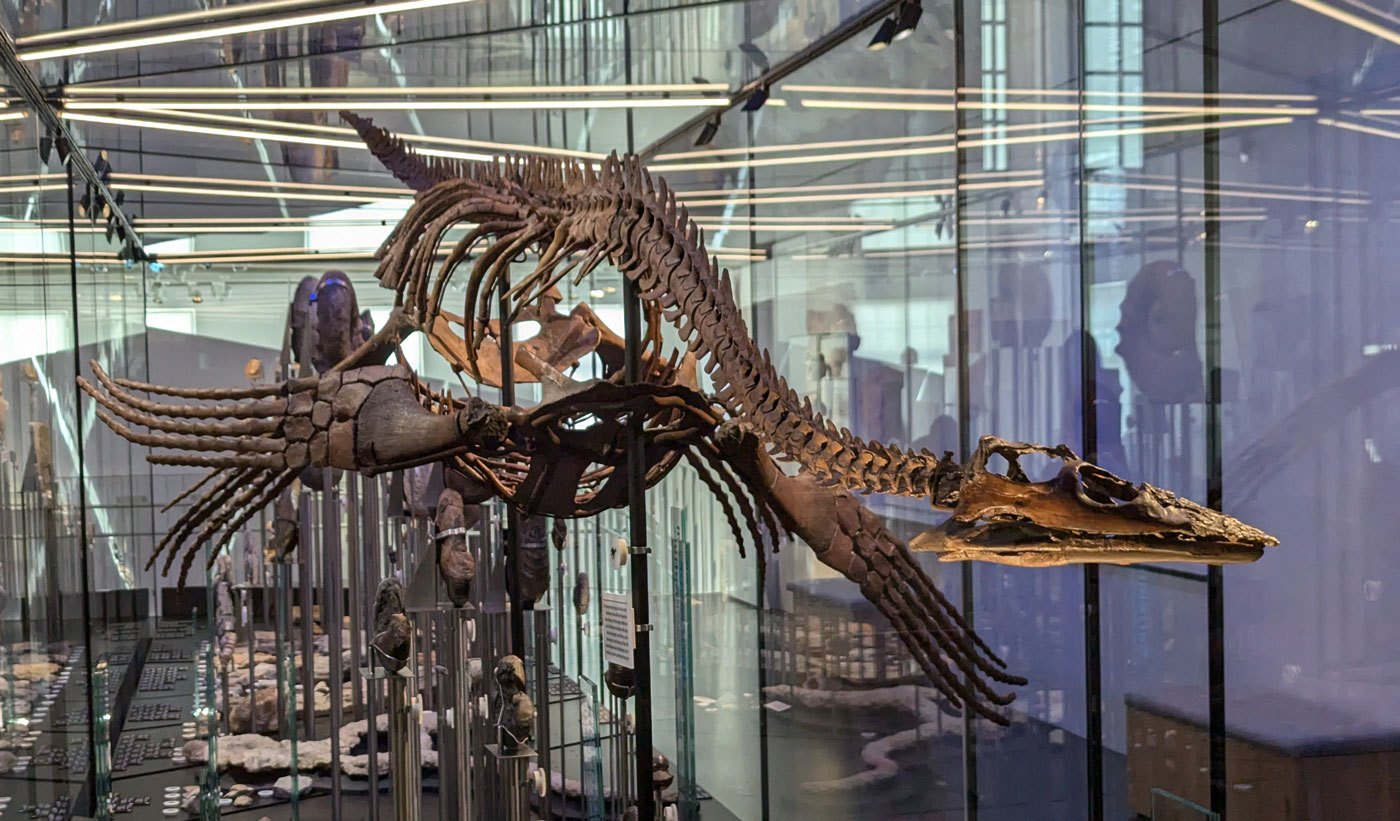
Leptocleididae is a clade of plesiosaurs known exclusively from Lower Cretaceous strata. The group had a wide palaeogeographic distribution, with records from Europe, North America, Africa, and Australia. Some members, such as Brancasaurus brancai, are interpreted as having inhabited brackish and freshwater environments. This species is particularly well documented, with numerous specimens representing different ontogenetic stages.
Leptocleidids first appear in the Aptian–Albian interval. Their youngest currently recognized record is Hastanectes valdensis from the Wadhurst Clay Formation of the United Kingdom.
| Genus | Species | Age | Stage | Distribution | Link |
|---|---|---|---|---|---|
| Umoonasaurus | Umoonasaurus demoscyllus | Cretaceous | Aptian-Albian | Australia | |
| Nichollssaura | Nichollssaura borealis | Cretaceous | Albian | North America | Nichollssaura borealis |
| Leptocleidus | Leptocleidus capensis | Cretaceous | Valanginian | Africa | |
| Leptocleidus | Leptocleidus superstes | Cretaceous | Barremian | Europe | |
| Vectocleidus | Vectocleidus pastorum | Cretaceous | Barremian | Europe | |
| Brancasaurus | Brancasaurus brancai | Cretaceous | Berriasian-Valanginian | Europe | |
| Hastanectes | Hastanectes valdensis | Cretaceous | Valanginian | Europe |
Polycotylidae Williston, 1909
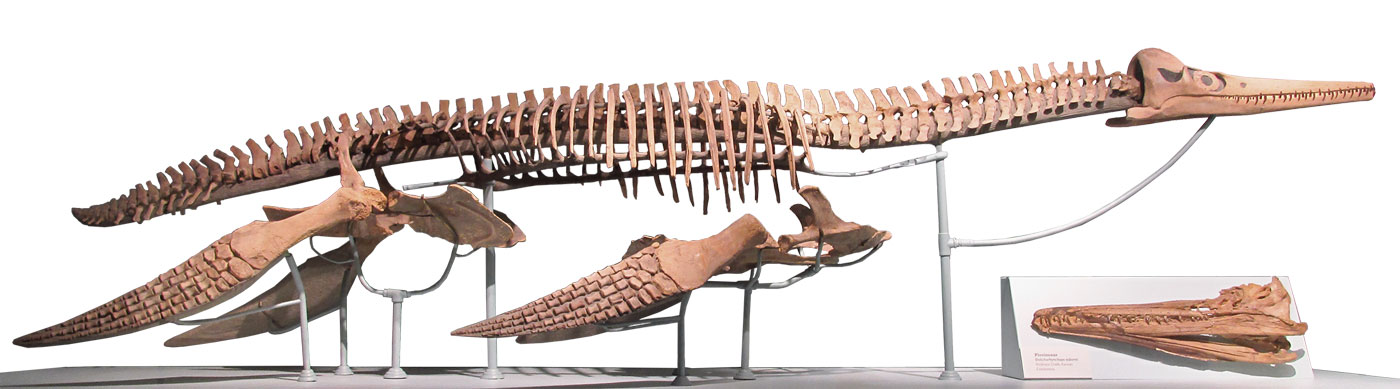
Polycotylidae are restricted to Cretaceous strata and, together with elasmosaurids, represent the final major radiation of plesiosaurs. Although phylogenetically distinct, polycotylids superficially resemble pliosaurs in their large heads and relatively short necks, and were historically included within that group.
They were taxonomically diverse and palaeobiogeographically widespread, with occurrences across several continents, though the majority of material derives from North America. The stratigraphically oldest polycotylid, diagnostic on genus-level, is Edgarosaurus muddi from the Upper Thermopolis Shale (Albian) of the USA.
Recent phylogenetic analyses subdivide Polycotylidae into several clades, including Occultonectia, Palmulasaurinae, Polycotylinae, and Dolichorhynchia. The youngest records come from the Maastrichtian, with forms such as Serpentisuchops pfisterae from the Pierre Shale of Wyoming (SA) and Sulcusuchus erraini from the La Colonia Formation of Argentina among the last known representatives of the family.
| Genus | Species | Age | Stage | Distribution | Link |
|---|---|---|---|---|---|
| Edgarosaurus | Edgarosaurus muddi | Cretaceous | Albian | North America | |
| Eopolycotylus | Eopolycotylus rankini | Cretaceous | Cenomanian | North America | |
| Pahasapasaurus | Pahasapasaurus haasi | Cretaceous | Cenomanian-Turonian | North America | |
| Plesiopleurodon | Plesiopleurodon wellesi | Cretaceous | Cenomanian | North America | |
| Trinacromerum | Trinacromerum bentonianum | Cretaceous | Cenomanian-Turonian | North America | |
| Trinacromerum | Trinacromerum kirki | Cretaceous | Cenomanian-Turonian | North America | |
| Manemergus | Manemergus anguirostris | Cretaceous | Turonian | Africa | |
| Mauriciosaurus | Mauriciosaurus fernandezi | Cretaceous | Turonian | North America | |
| Palmulasaurus | Palmulasaurus quadratus | Cretaceous | Turonian | North America | |
| Scalamagnus | Scalamagnus tropicensis | Cretaceous | Turonian | North America | |
| Thililua | Thililua longicollis | Cretaceous | Turonian | Africa | |
| Dolichorhynchops | Dolichorhynchops osborni | Cretaceous | Coniacian-Campanian | North America | |
| Georgiasaurus | Georgiasaurus penzensis | Cretaceous | Santonian | Europe | |
| Polycotylus | Polycotylus latipinnis | Cretaceous | Santonian-Campanian | North America | |
| Polycotylus | Polycotylus sopozkoi | Cretaceous | Santonian-Campanian | Asia | |
| Martinectes | Martinectes bonneri | Cretaceous | Campanian | North America | |
| Unktaheela | Unktaheela specta | Cretaceous | Campanian | North America | |
| Dolichorhynchops | Dolichorhynchops herschelensis | Cretaceous | Campanian-Maastrichtian | North America | |
| Serpentisuchops | Serpentisuchops pfisterae | Cretaceous | Maastrichtian | North America | |
| Sulcusuchus | Sulcusuchus erraini | Cretaceous | Maastrichtian | South America |