Hauffiosaurus zanoni, a pliosaur from the Lower Jurassic of Germany

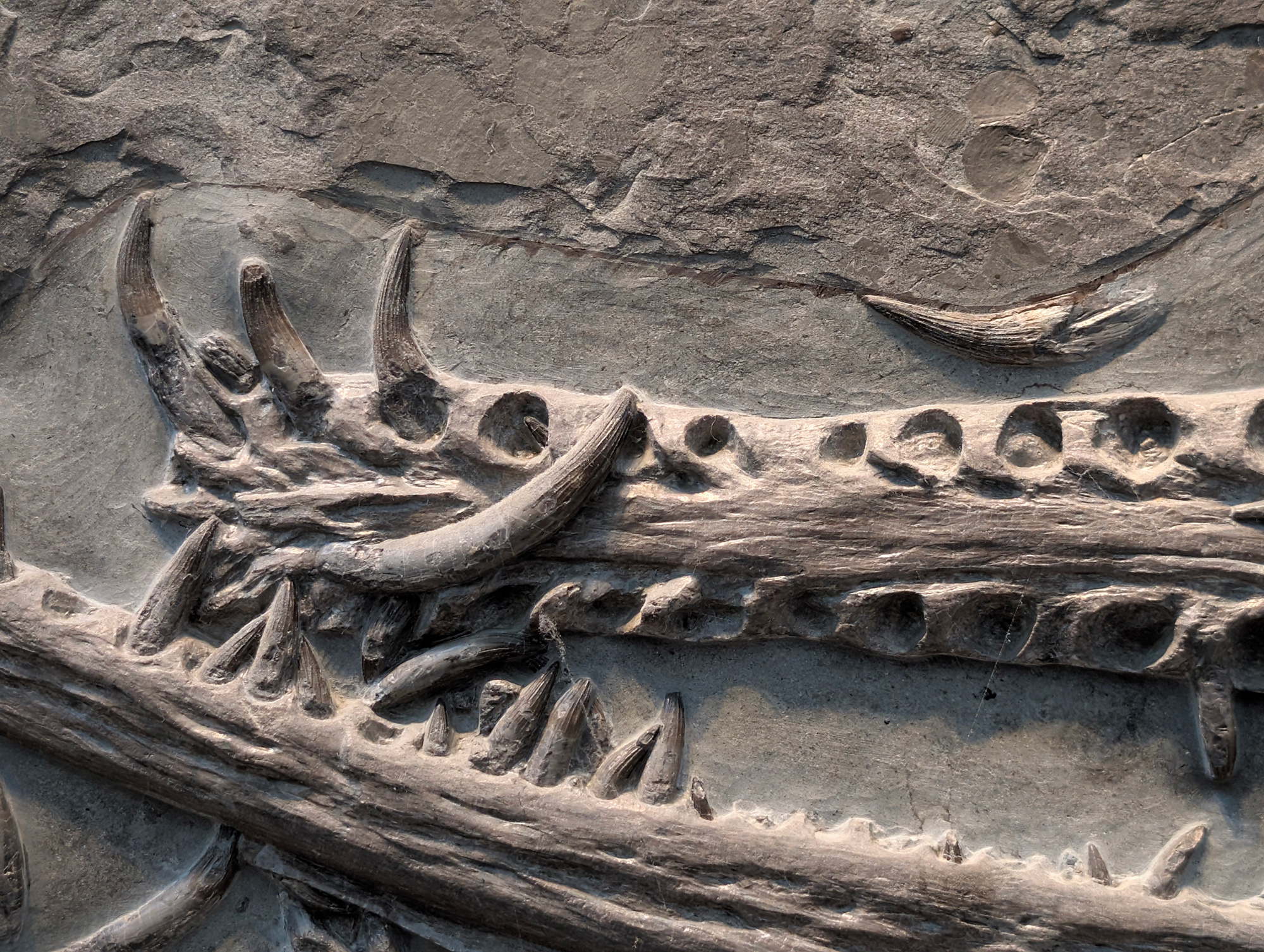
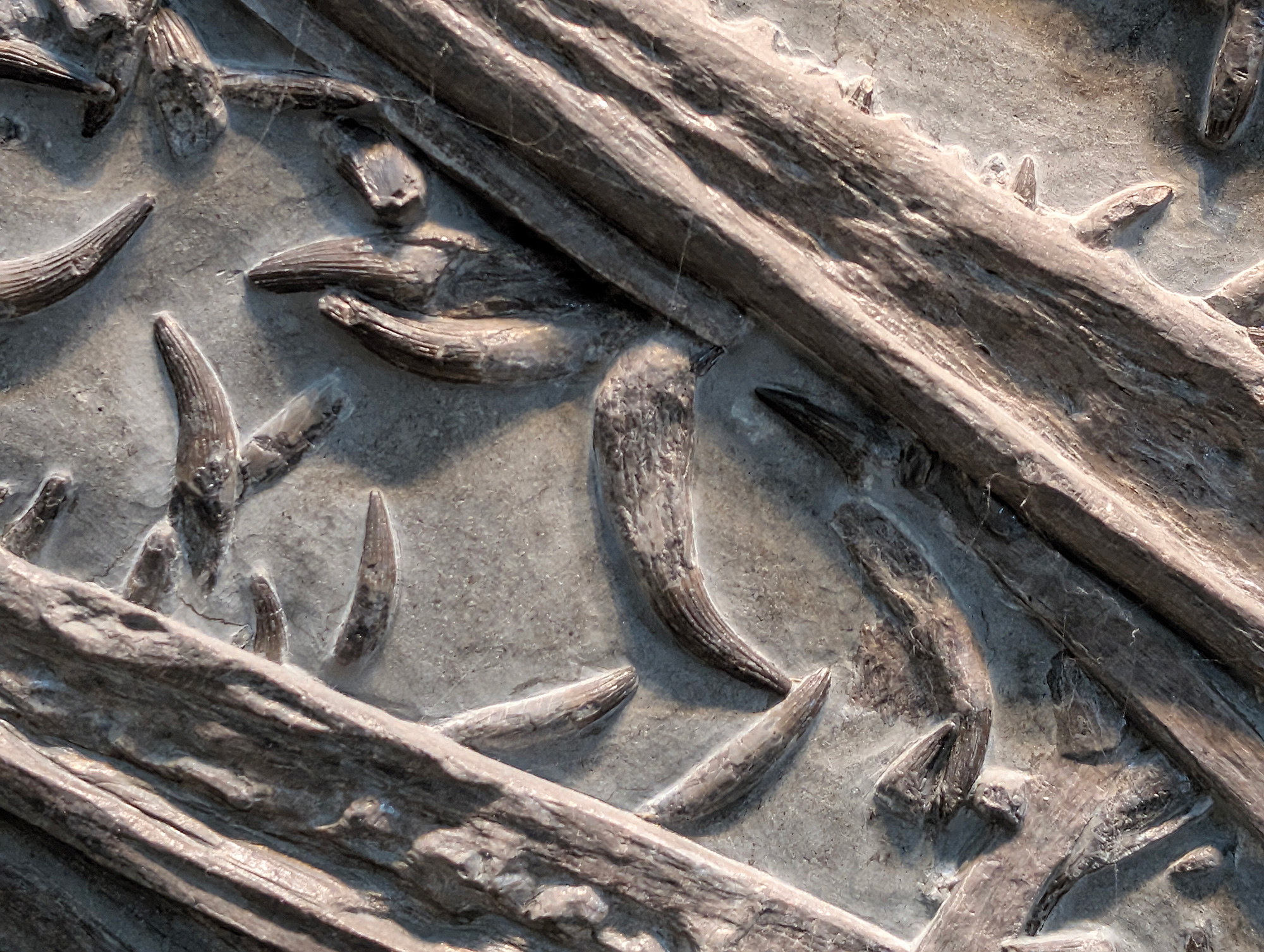
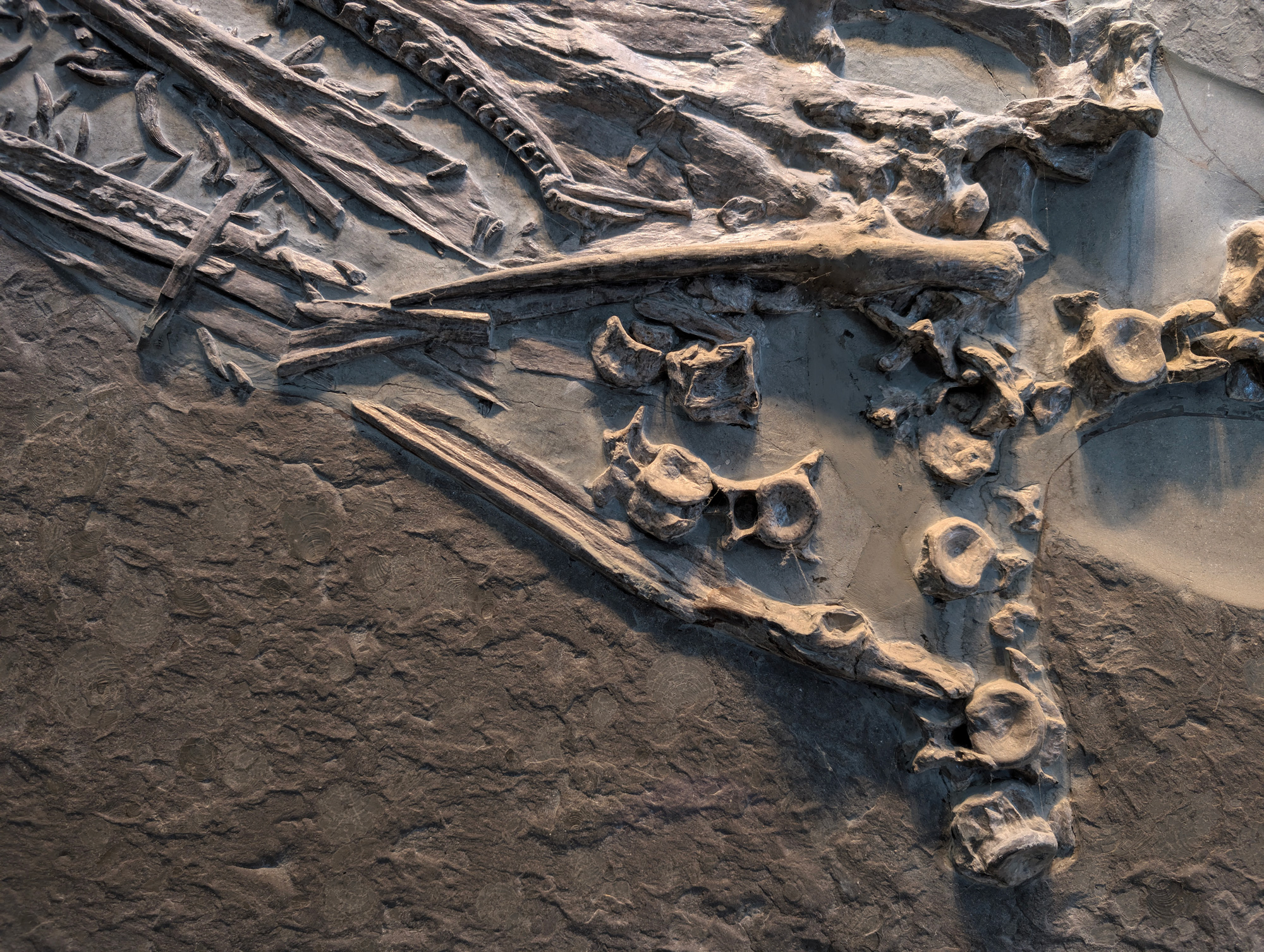
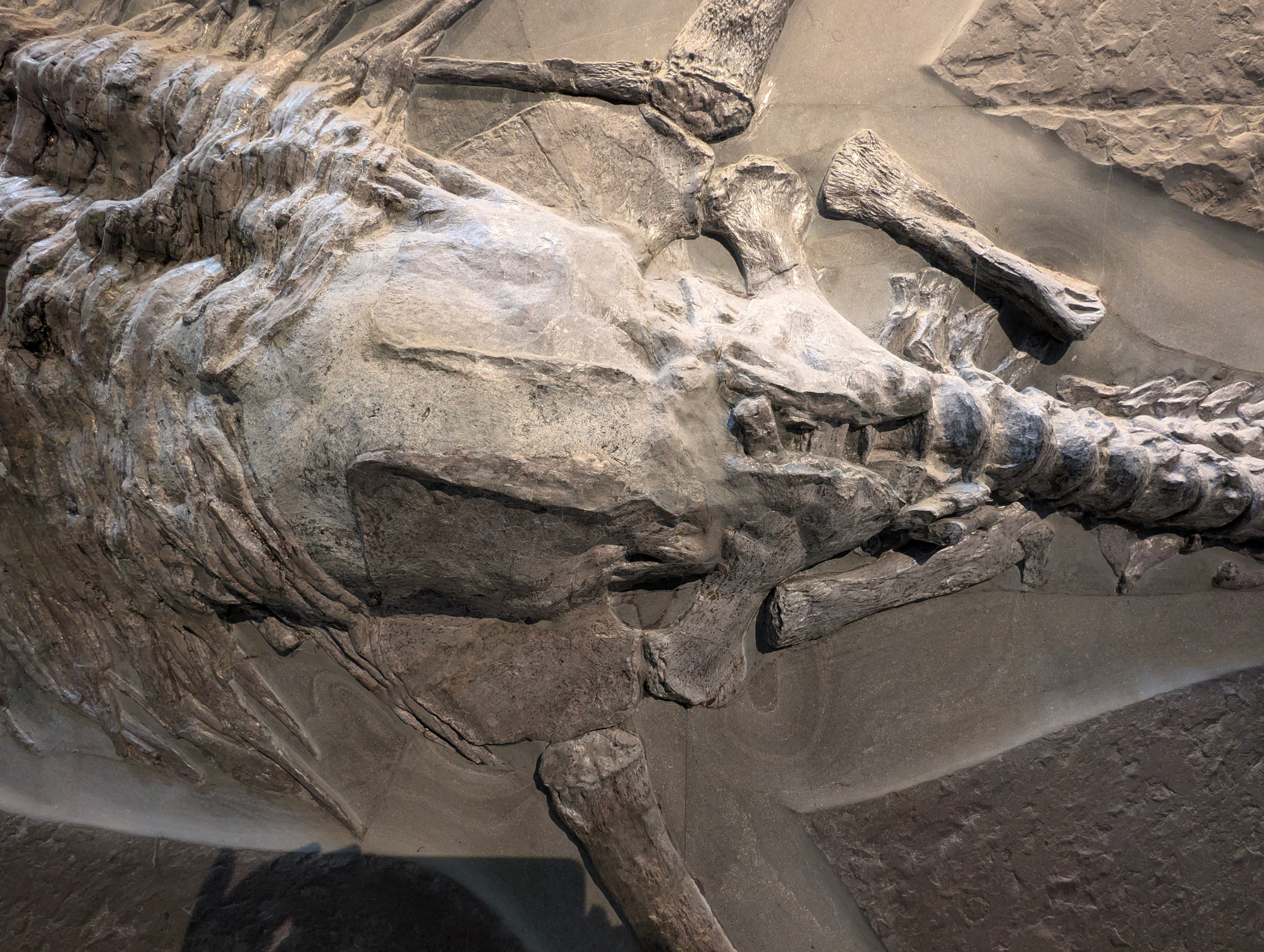
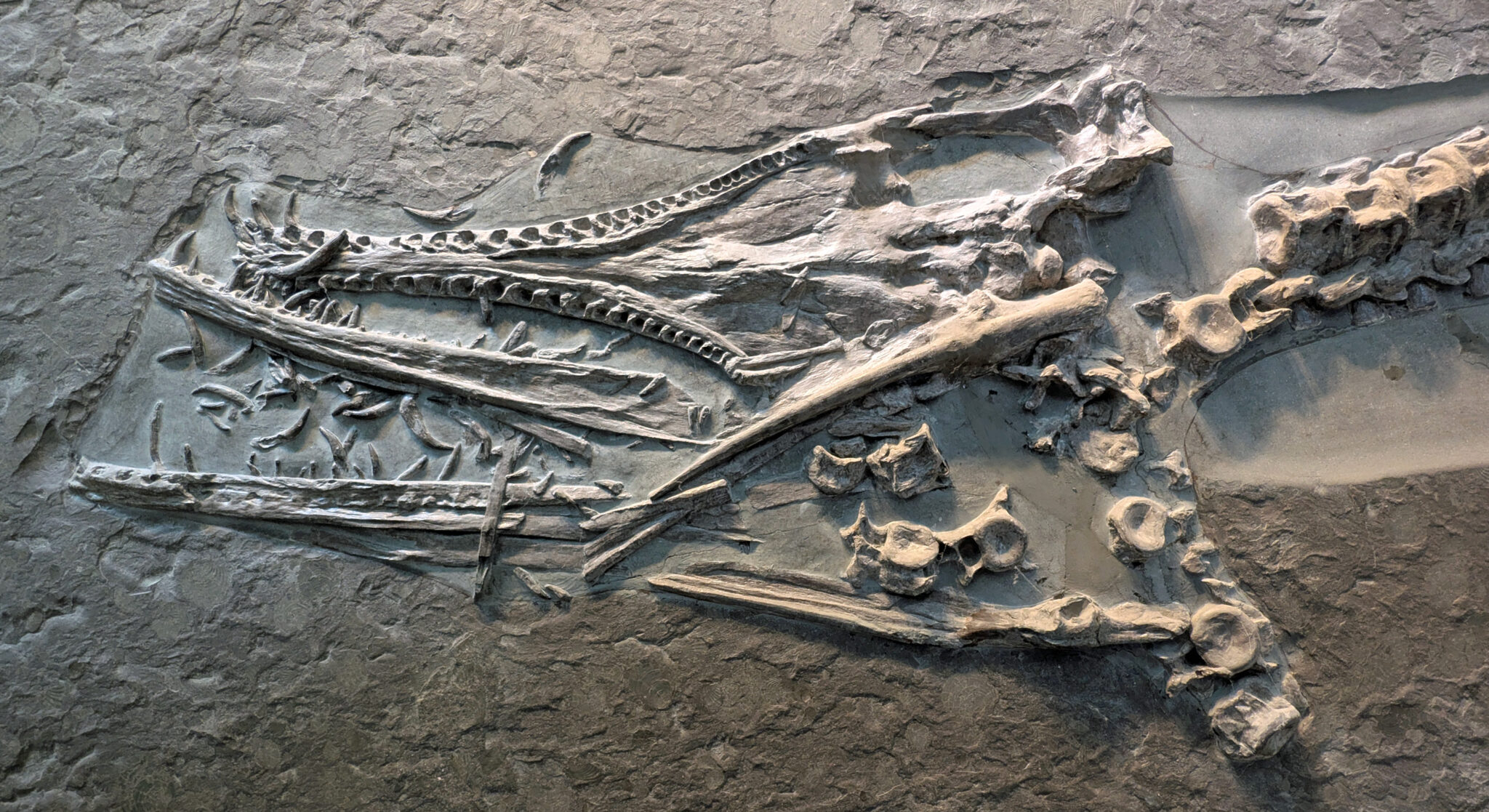
Skull of the Hauffiosaurus zanoni holotype specimen.
Partly disarticulated skull of the Hauffiosaurus zanoni holotype in ventral view, measuring approximately 43 cm.

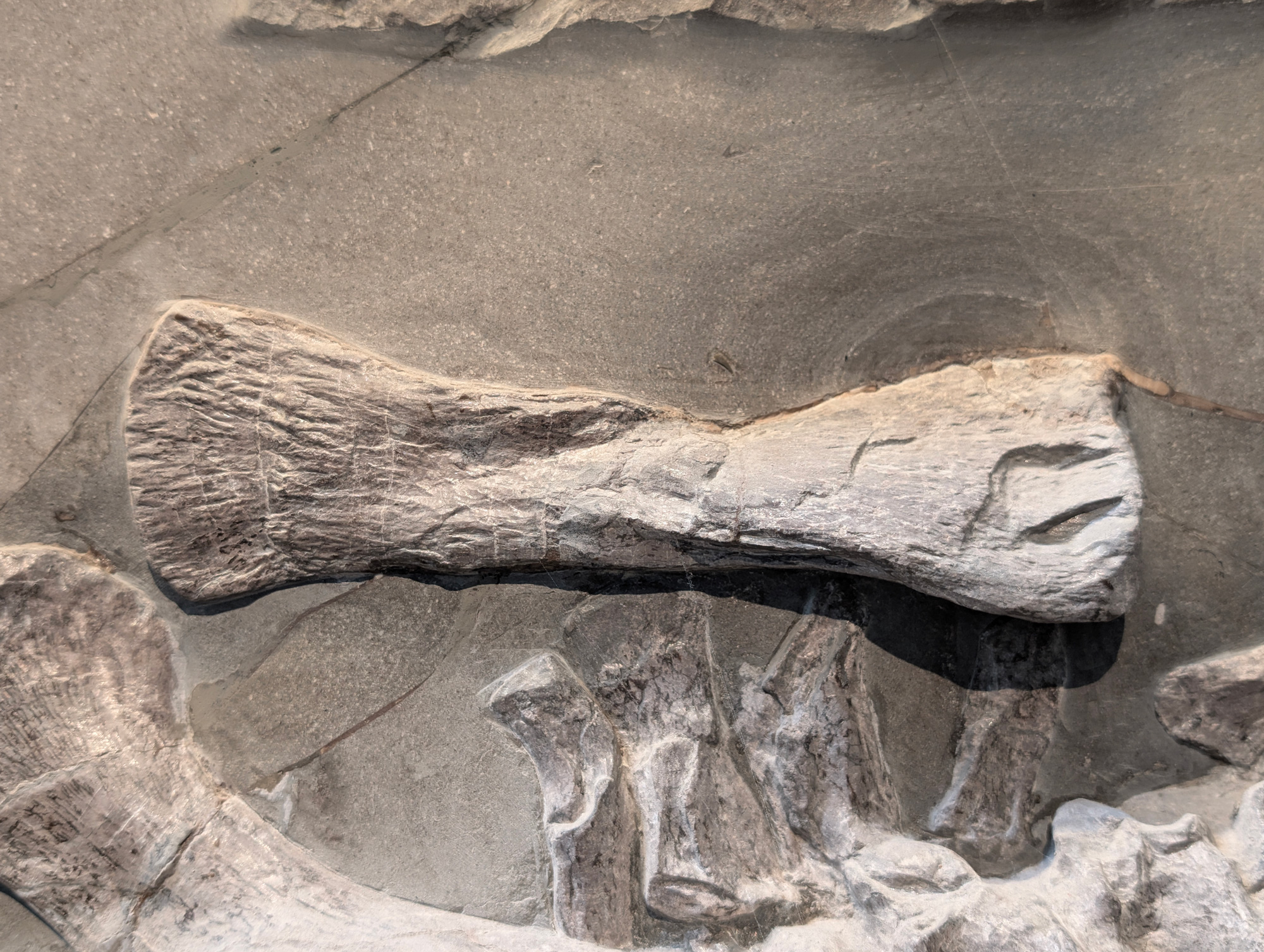
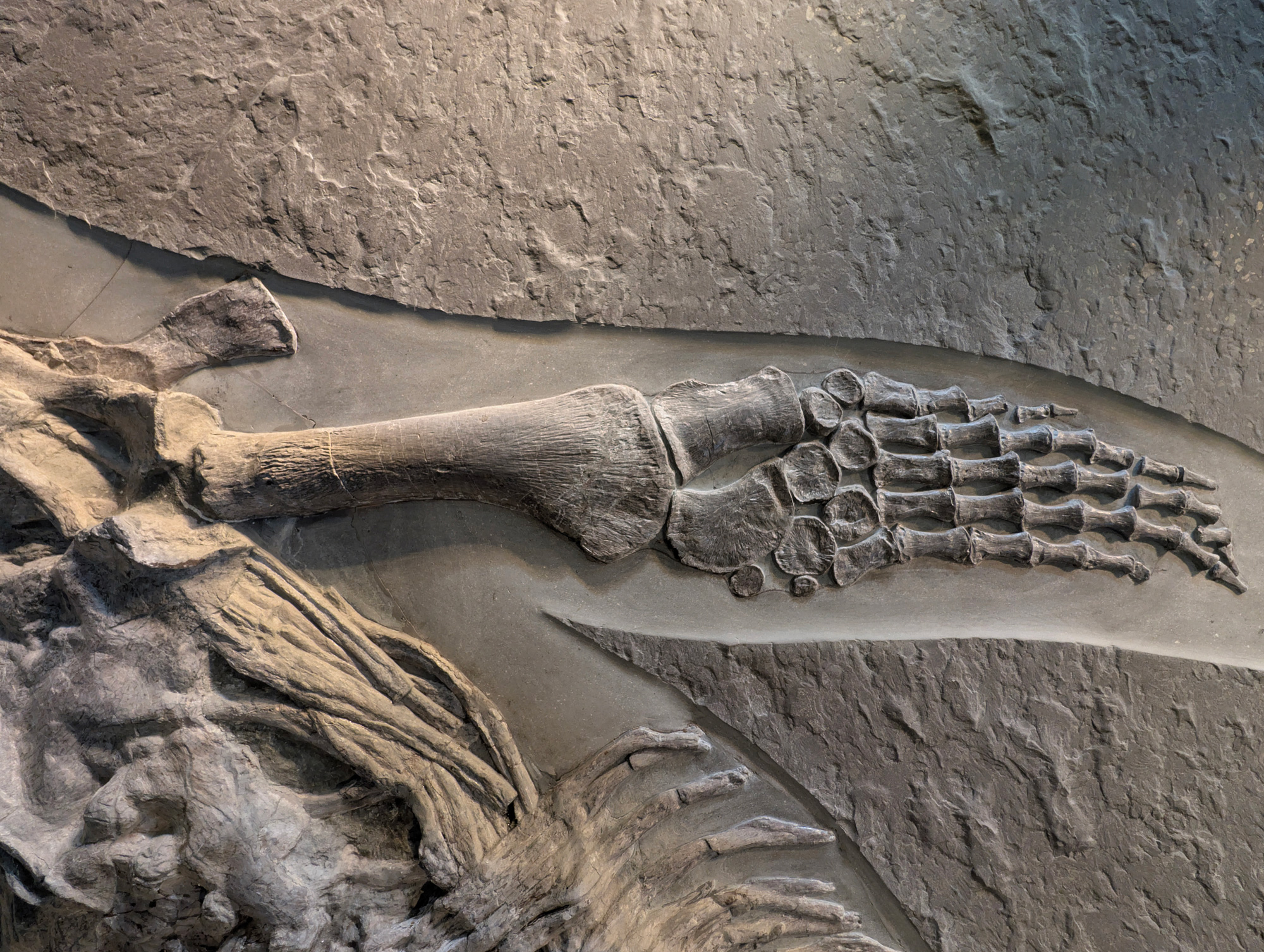
Hauffiosaurus zanoni is a basal pliosaurid from the Lower Jurassic (lower Toarcian) of Germany. The taxon was established by O’Keefe (2001) and is based upon an almost complete and largely articulated skeleton. The species is known only from this one specimen that was found in Holzmaden, Germany, and is embedded in a slab of Posidonia Shale. The specimen is preserved in ventral view and is curated at the Urweltmuseum Hauff (MH) in Holzmaden. The holotype has no catalogue number and thus needs to be cited as MH uncatalogued (pers. comm. F. Hauff, 04.2025). The specimen number HAUF 7 was mentioned in Benson et al. (2011). This number, however, refers to a different specimen from the MH collection that was later described as a referred specimen of the plesiosauroid Plesiopterys wildi (Marx et al. 2025).
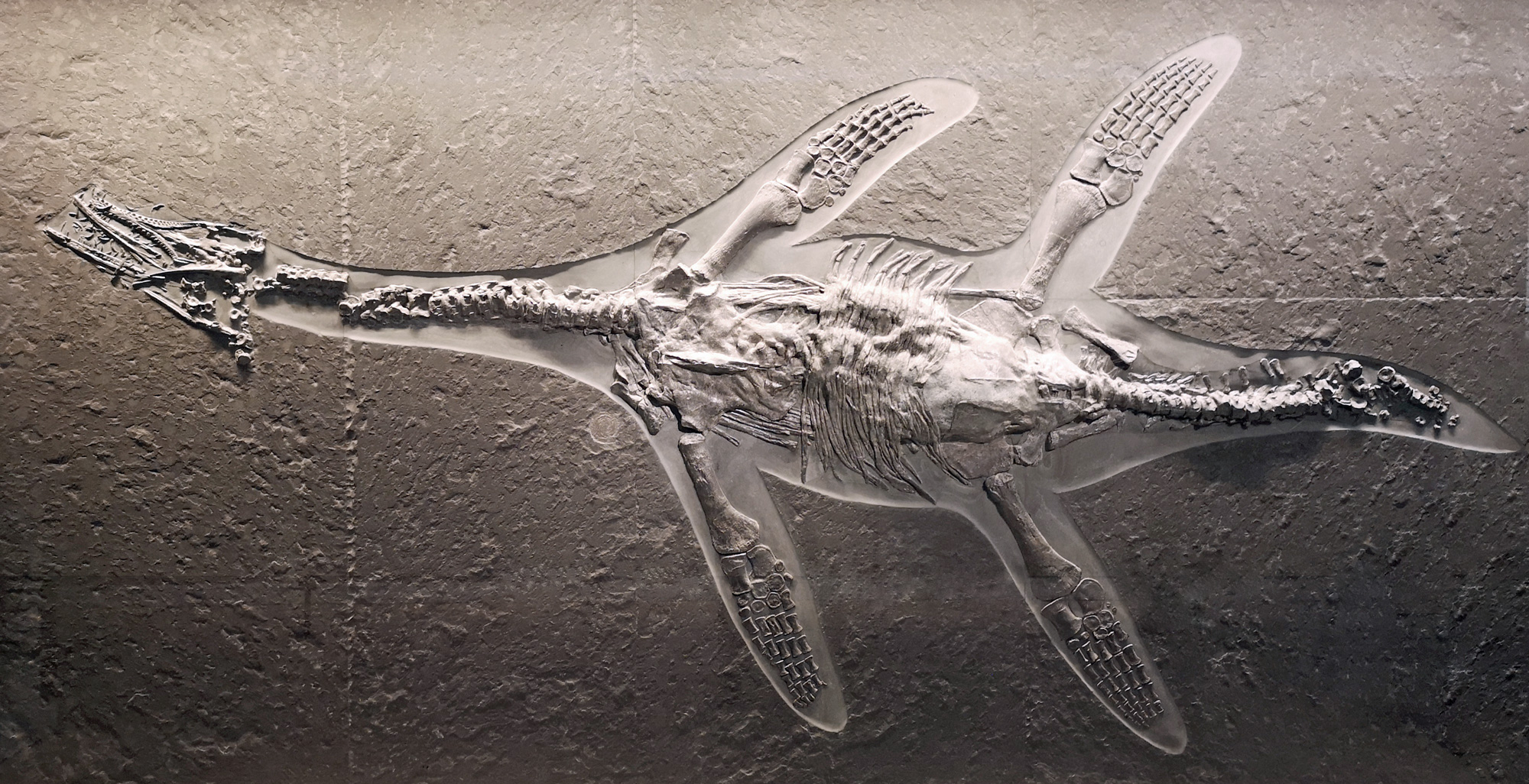
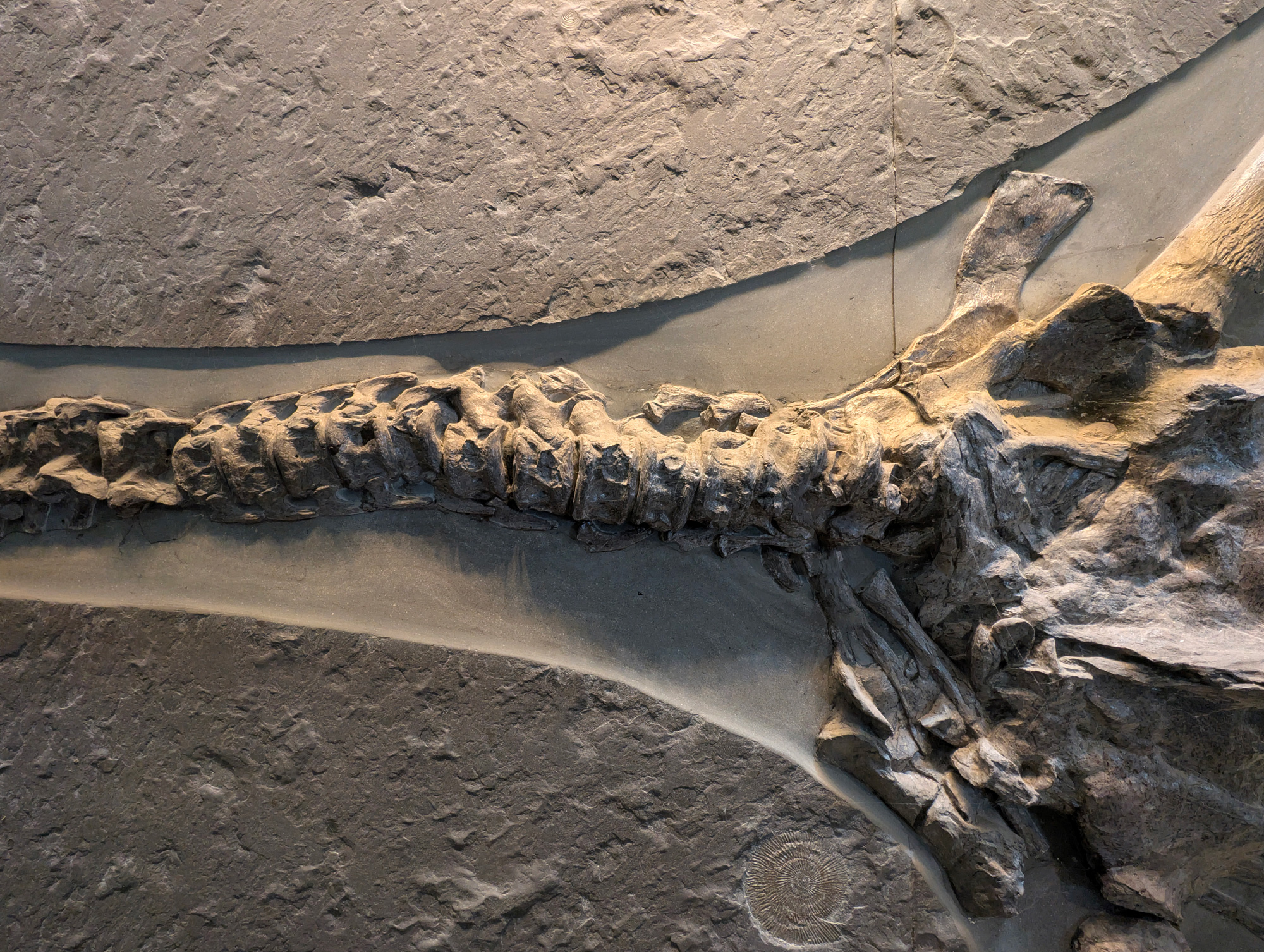
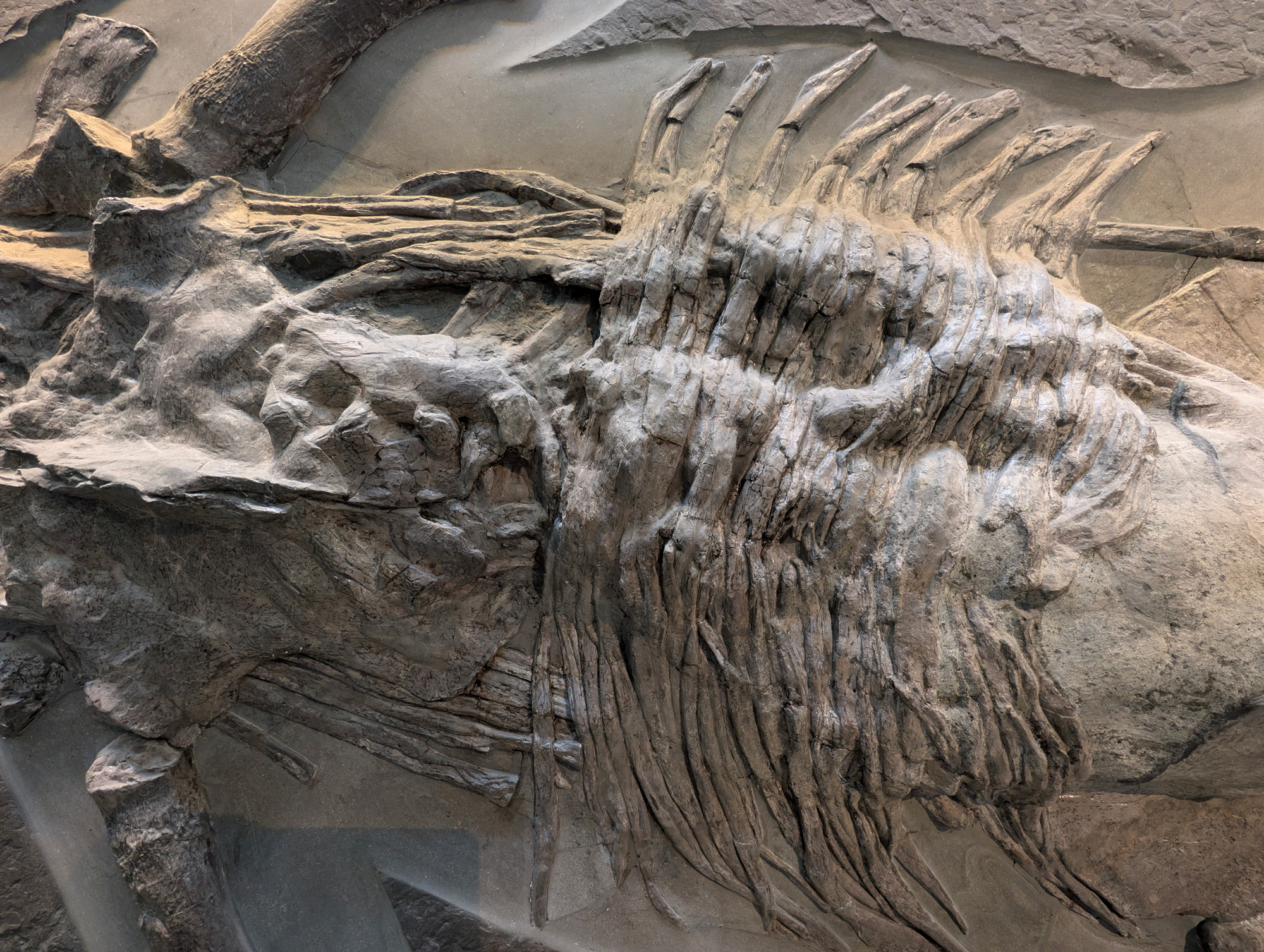
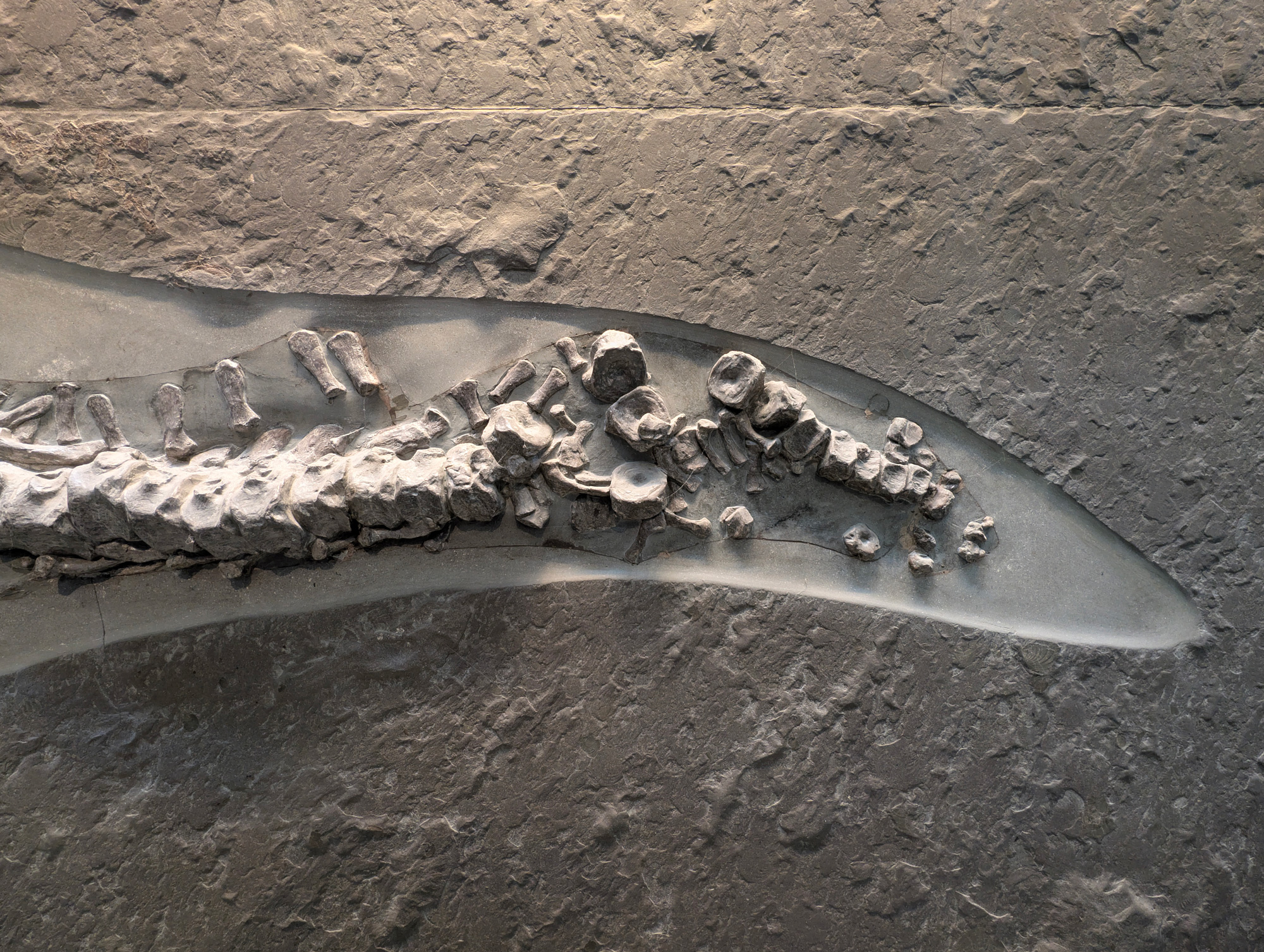
Hauffiosaurus zanoni represents a long-necked pliosaurid comprising at least 28 additional cervical vertebrae and at least 31 caudal vertebrae (Vincent 2011). The girdle bones and gastralia obscure the pectoral, dorsal, and sacral regions. The skull measures 43 cm, and the entire skeleton is approximately 3.4 m long.

Hauffiosaurus zanoni holotype skeleton from the Lower Jurassic Posidonia Shale (Posidonienschiefer Formation) of Holzmaden, Germany, on display at the Urweltmuseum Hauff
Hauffiosaurus zanoni holotype skeleton at the Urweltmuseum Hauff in Holzmaden, Germany. The specimen measures approximately 3.4 m.

Stratigraphic unit and plesiosaur assemblage

The holotype of Hauffiosaurus zanoni was found in the Harpoceras elegantulum horizon of the Harpoceras falciferum ammonite zone of the Posidonienschiefer Formation, which dates to the lower Toarcian (Lias εII4, Unterer Schiefer). The same ammonite zone yielded most of the plesiosaur specimens known from the Posidonia Shale, such as the holotypes of Meyerasaurus victor (SMNS 12478) and Microcleidus brachypterygius (GPIT-PV-60640), the holotype (SMNS 16812) and referred specimen (MH 7) of Plesiopterys wildi, as well as yet-undescribed plesiosauroids (Sachs et al. 2026).

Genus Hauffiosaurus O'Keefe, 2001

Type species: Hauffiosaurus zanoni O’Keefe, 2001
Additional species: Hauffiosaurus longirostris (Tate & Blake, 1876), Hauffiosaurus tomistomimus Benson, Ketchum, Noè & Gómez-Pérez, 2011
Distribution: Lower Jurassic, Toarcian, Europe (Germany, United Kingdom).

Hauffiosaurus zanoni O’Keefe, 2001

Holotype: MH uncatalogued, almost complete and articulated skeleton.
Stratum typicum: Harpoceras elegantulum horizon, Harpoceras falciferum ammonite Zone, Lias εII4 (Unterer Schiefer), Posidonienschiefer Formation, lower Toarcian, Lower Jurassic.
Locus typicus: Holzmaden, Esslingen District, Baden-Württemberg, southwestern Germany.
Diagnosis: Moderately sized pliosauroid with an ilium that is autapomorphically as long as the pubis, and longer than the ischium. H. zanoni also shows this unique combination of characters: the rostrum is elongate; vomers do not extend beyond the internal nares; lateral palatal fenestra present; no suborbital fenestra developed; the ectopterygoid boss contacts the jugal and the posterior maxilla; no anterior interpterygoid vacuity developed; palatines do not contact the internal nares; the ventral side of the braincase shows a concave area surrounded laterally and posteriorly by two excrescences that project ventrally; seven premaxillary teeth; teeth are ornamented with longitudinal enamel ridges; 30 or 31 cervical vertebrae; the limb girdles are short and wide; the pubis has a straight median border, forming an almost orthogonal angle with the anterior border; ischia short relative to their width; ilium long, flat, and only slightly twisted; preaxial margin of the humerus straight; the humerus is shorter than the femur; the epipodials are longer than wide; there are two supplementary elements in each paddle, located proximally between the distal margin of the ulna and fibula and the proximal margin of the ulnare and calcaneum, and distally close to the postaxial margin of the ulnare and calcaneum (modified from Vincent 2011).
Status: Valid taxon
Synonyms: None

Which specimens are known of Hauffiosaurus zanoni ?

So far, the species H. zanoni is known only from its holotype specimen (MH uncatalogued). A closely related form from the Lias εII3 was described as Plesiosaurus posidoniae by Quenstedt (1865). This taxon is known only from an incomplete hind limb (GPIT MS/V20/2-7) from the Posidonienschiefer Formation of Reutlingen-Ohmenhausen, Germany. Even though the specimen resembles Hauffiosaurus, it differs from H. zanoni in several features, such as the greater slenderness of the femora in the latter, and has been identified as ?Pliosauridae by Sachs et al. (2026).

Other species of Hauffiosaurus

Hauffiosaurus zanoni is the type species of the genus Hauffiosaurus. In addition, there are currently two other species that have been assigned to the genus: Hauffiosaurus tomistomimus and Hauffiosaurus longirostris.

Hauffiosaurus tomistomimus Benson, Ketchum, Noè & Gómez-Pérez, 2011

This species Hauffiosaurus tomistomimus is based upon an almost complete, 4.23 m long skeleton from the Harpoceras serpentinum biozone of the Alum Shale Member of the Whitby Mudstone Formation. It was found near Whitby in Yorkshire, United Kingdom, and is now on display at the Manchester Museum (MANCH LL 8004), alongside a skeleton of the plesiosauroid Microcleidus. The species Hauffiosaurus tomistomimus was established as a new species by Benson et al. (2011).

Hauffiosaurus longirostris (Blake in Tate and Blake, 1876)

Hauffiosaurus longirostris is based upon a 68 cm long skull and some postcranial elements (vertebrae and limb elements), which have been historically associate with the skull, but which belong to different specimens (Smith & Lomax 2019). The skull derives from the Whitby Mudstone Formation and was found near Whitby, Yorkshire, United Knowledge. The specimen (MCZ 1033) is curated at the Museum of Comparative Zoology of Harvard University. The specimen has a long taxonomic history (see e.g. White 1940, Benton & Taylor 1984, Benson et al. 2011). The new combination Hauffiosaurus longirostris was established by Benson et al. (2011).
Systematic palaeontology (sensu Benson & Druckenmiller 2014)
Plesiosauria de Blainville, 1835
Pliosauridae Seeley, 1874

Institutional abbreviations
GPIT – Institut für Geologie und Paläontologie der Universität Tübingen, Tübingen, Germany
MANCH – Manchester Museum, University of Manchester, Manchester, UK
MCZ – Museum of Comparative Zoology, Harvard University, Cambridge, Massachusetts, USA
MH – Urweltmuseum Hauff, Holzmaden, Germany
SMNS – Staatliches Museum für Naturkunde, Stuttgart, Germany

Cited literature

Smith, A. S. & Lomax, D. R. (2019) 21. Reptiles – Plesiosauria. In. Lord, A. R. (ed). Fossils from the Lias of the Yorkshire Coast. The Palaeontological Association. pp. 332–345.

Scroll to Top